Category: Fern Smith

Updates on Fern Smith’s art activities

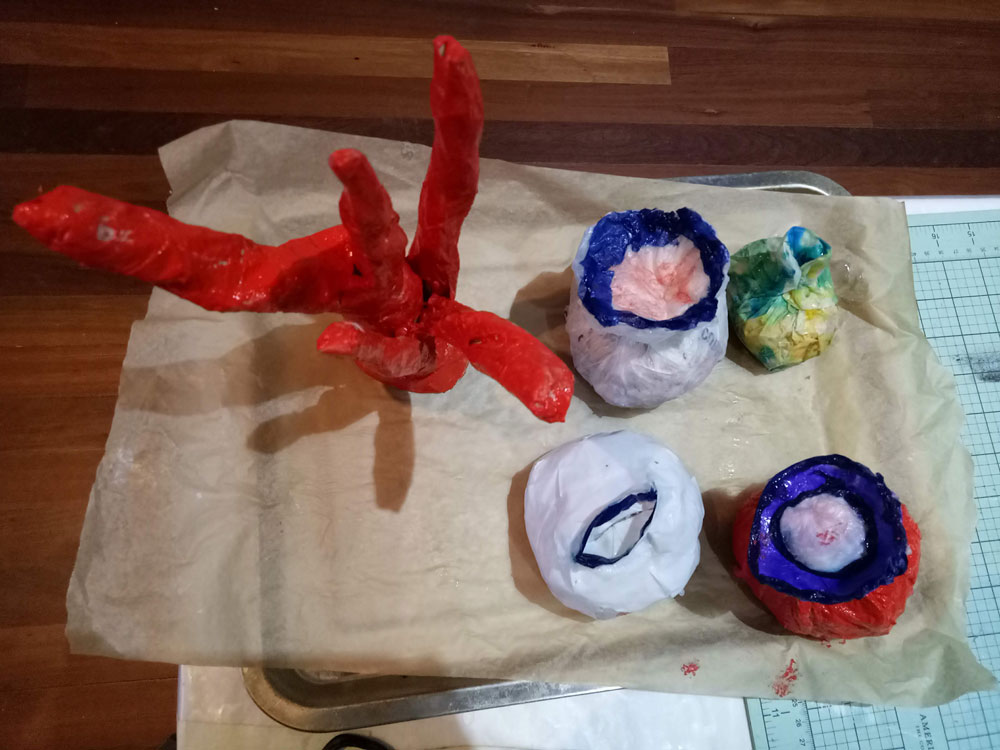
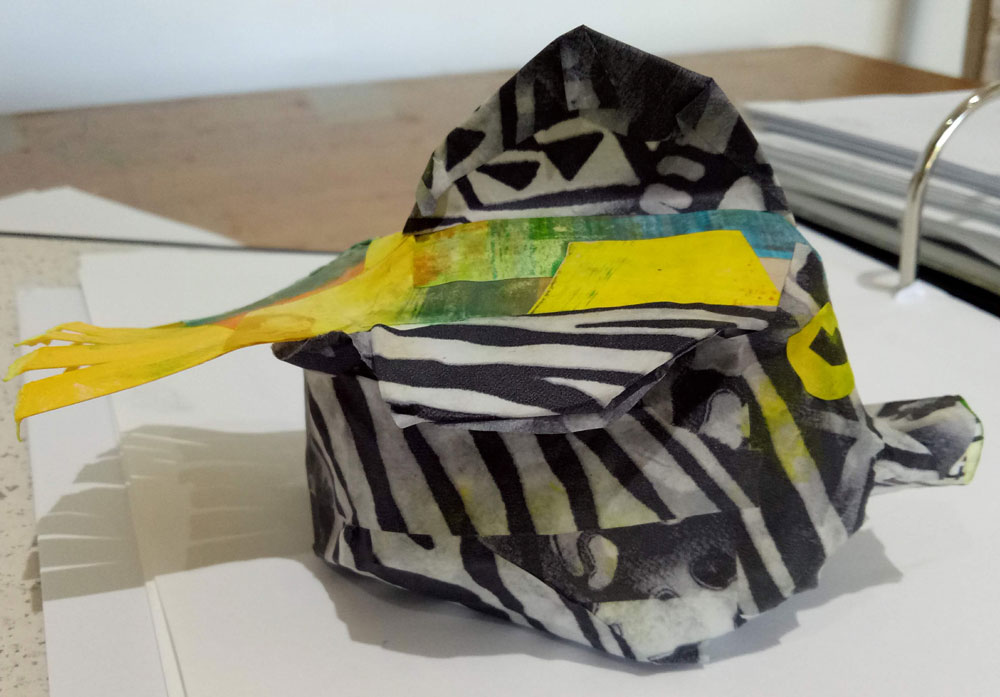
  • Paper Pulp

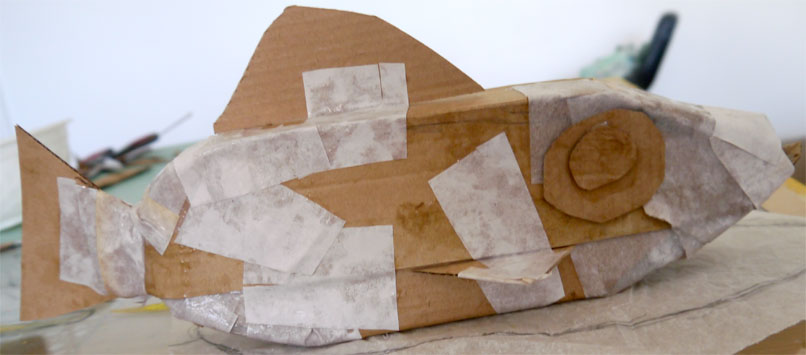
    Office paper, scrap paper any paper lying around your home. Cut into strips smaller the better. Or if you have a paper shredder that is better still.

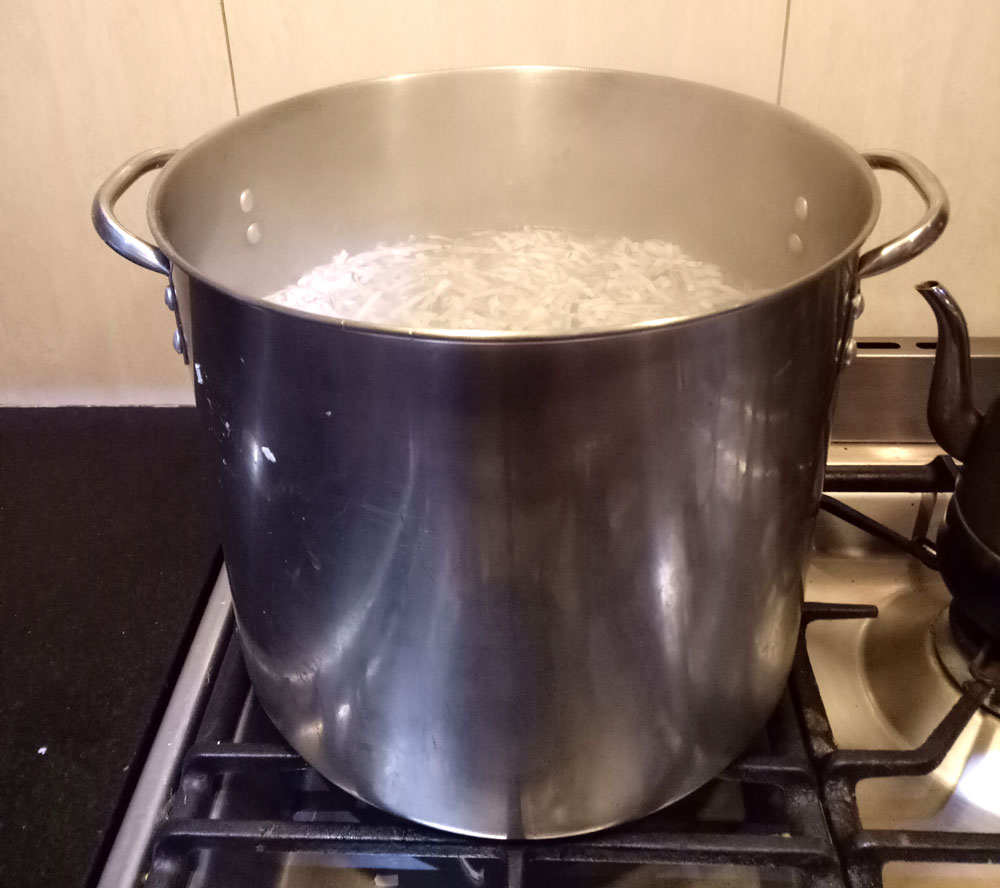
    Put the shredded paper in a large pot and fill with water and boil. Leave soak over night. Add a bit of salt and eucalyptus oil to stop bacteria and mold.

    Get a food blender or paint blender and swirl the paper around until all the fibers break up into small bits.

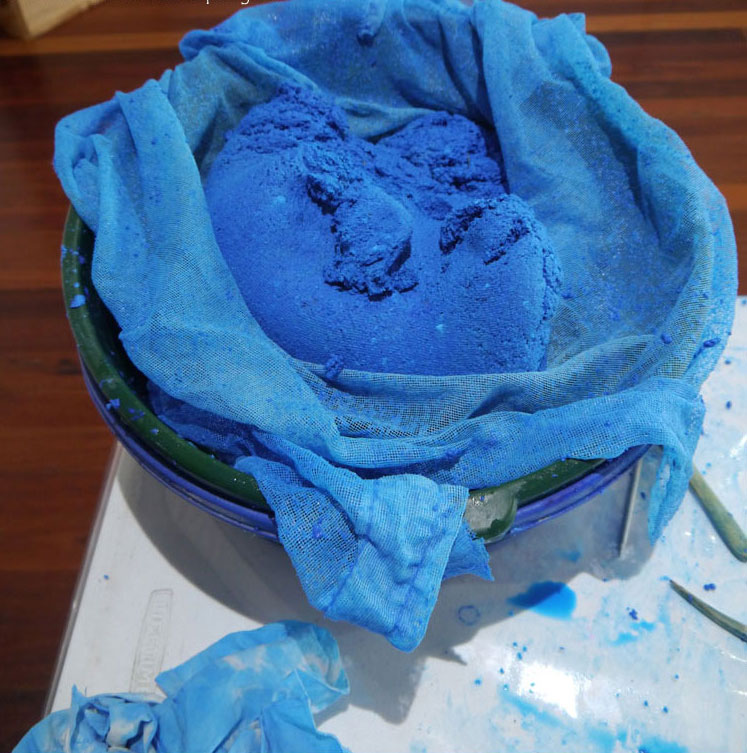
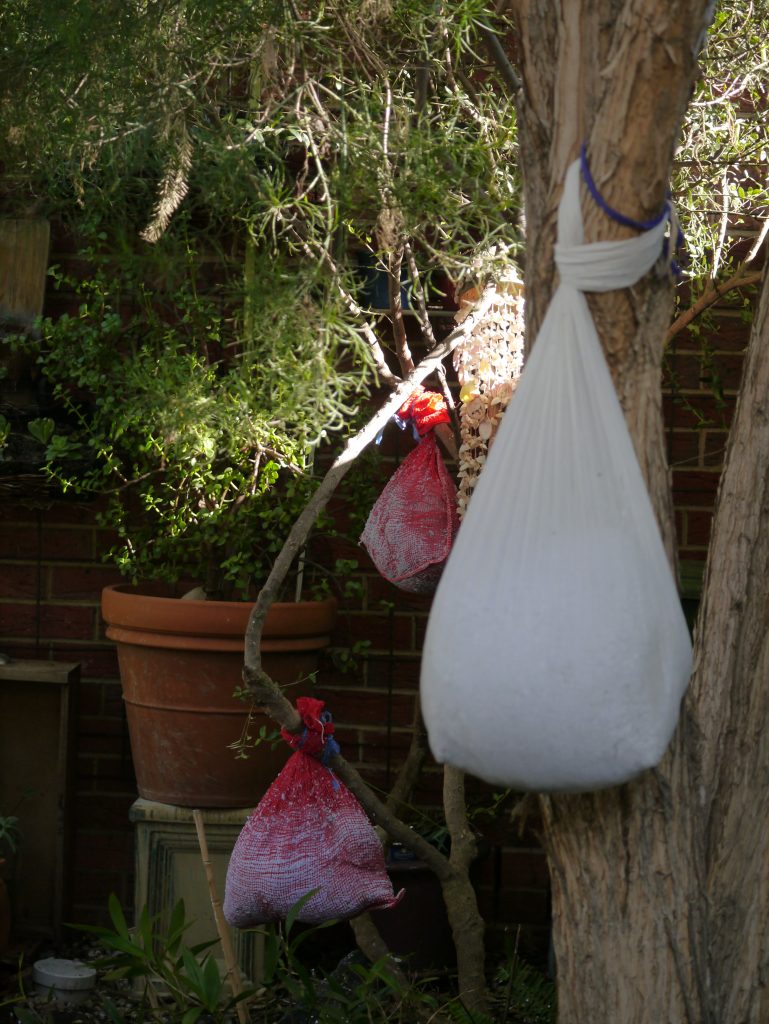
    Drain through a cotton sheet or or fine mesh cloth.

    when drained squeeze as much water out as possible.

    Now it should look friable and break away in your hand

    Add handmade wheat starch glue, powdered paint or vegetable dye and mush and squeeze until desired consistency. I grab a hand full in my hand and squeeze lightly if it holds its ready to start creating. Add glue if need be along the way. You also may need to keep squeezing water out if it wasn’t done enough the first time. Practice makes perfect on making pulp.

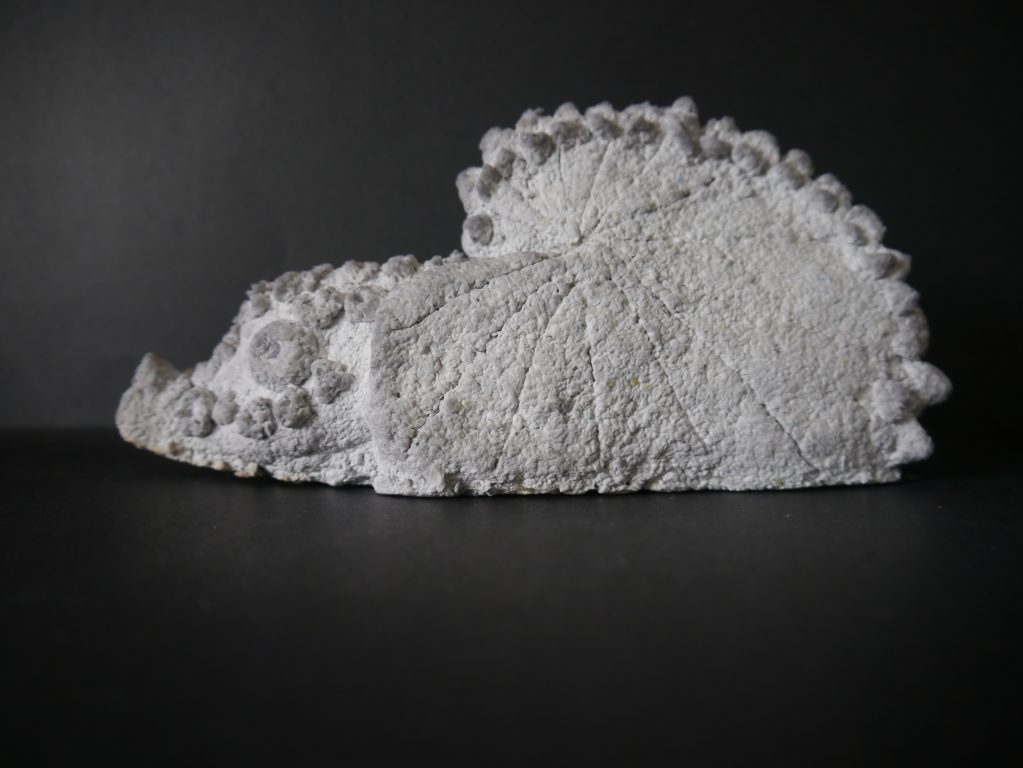
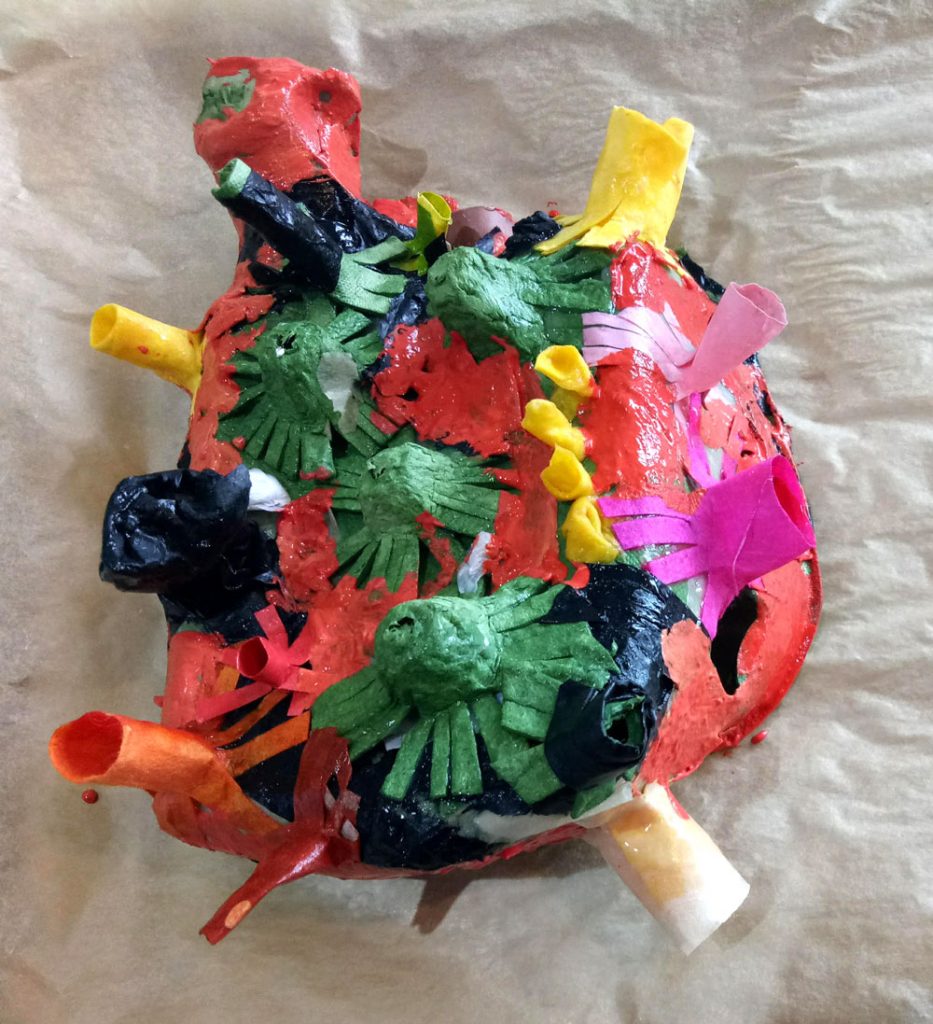
    Dry your creations on a sunny window sill and/or bake in the oven on LOW.

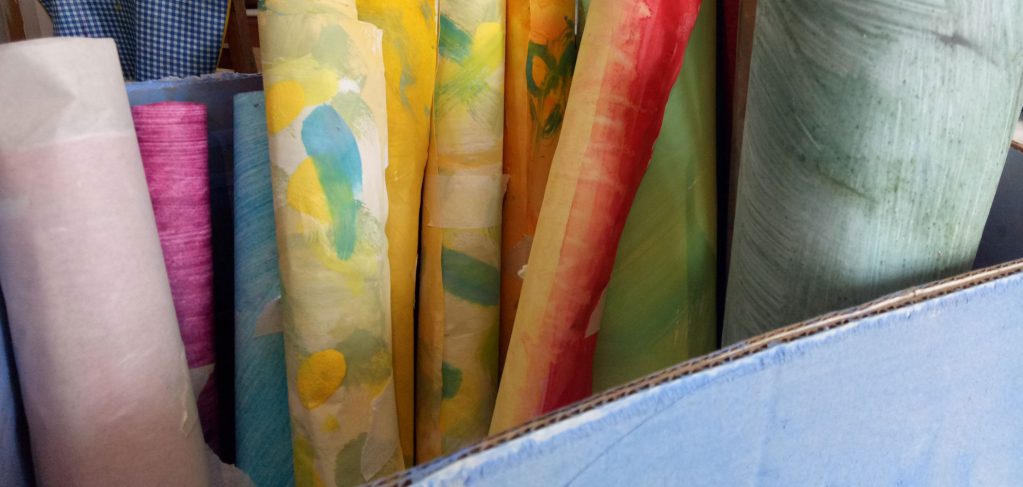
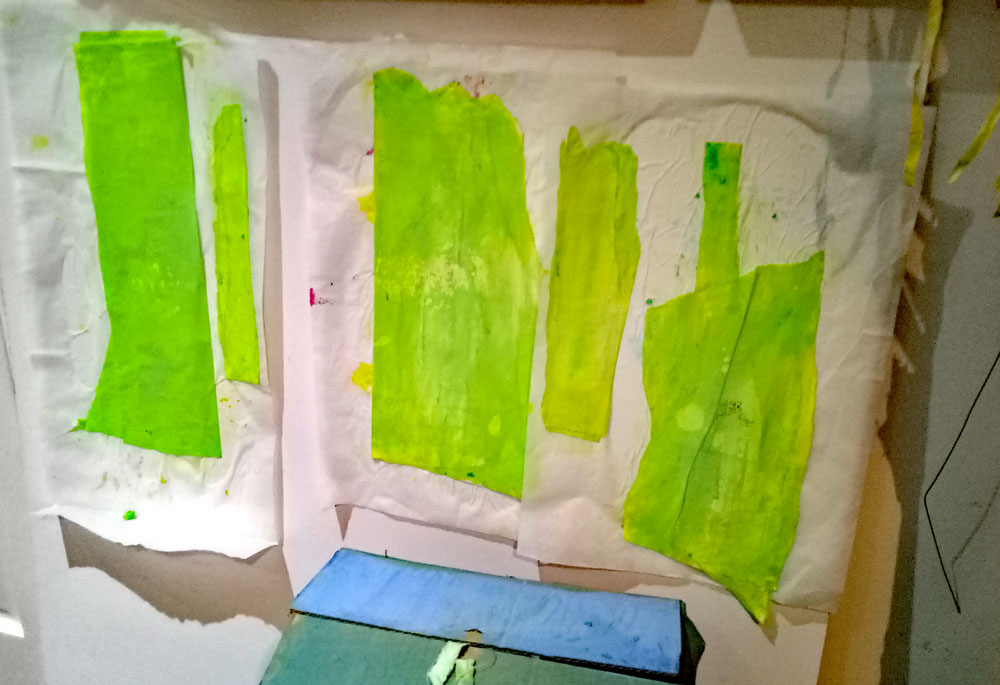
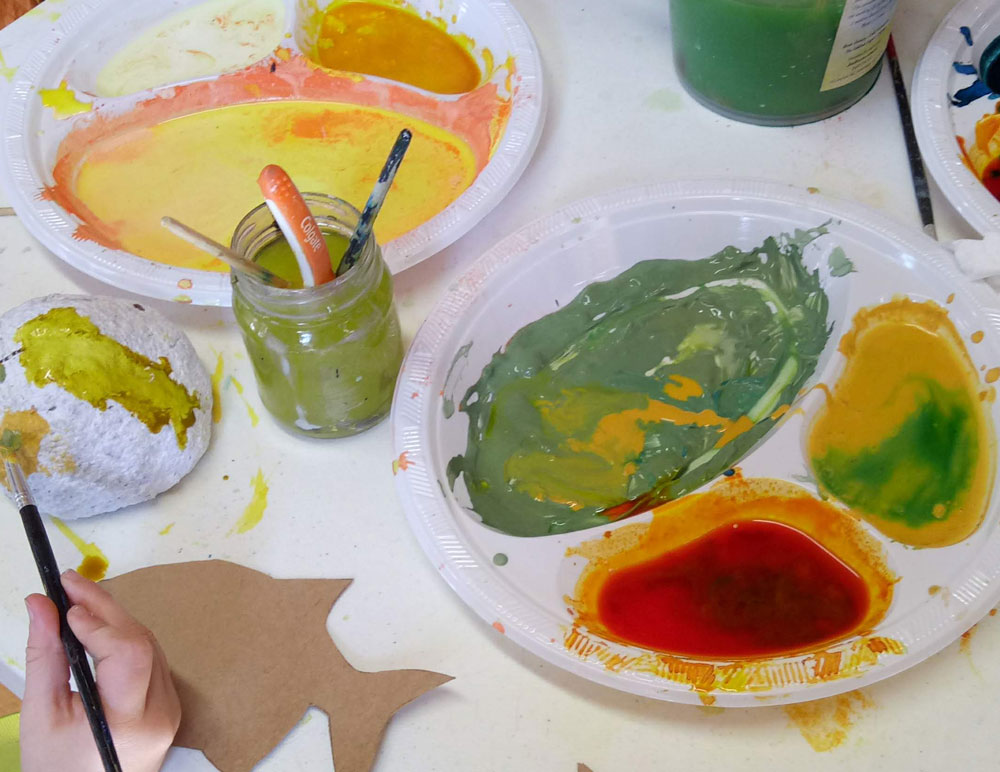
  • Vegetable Dye Paint

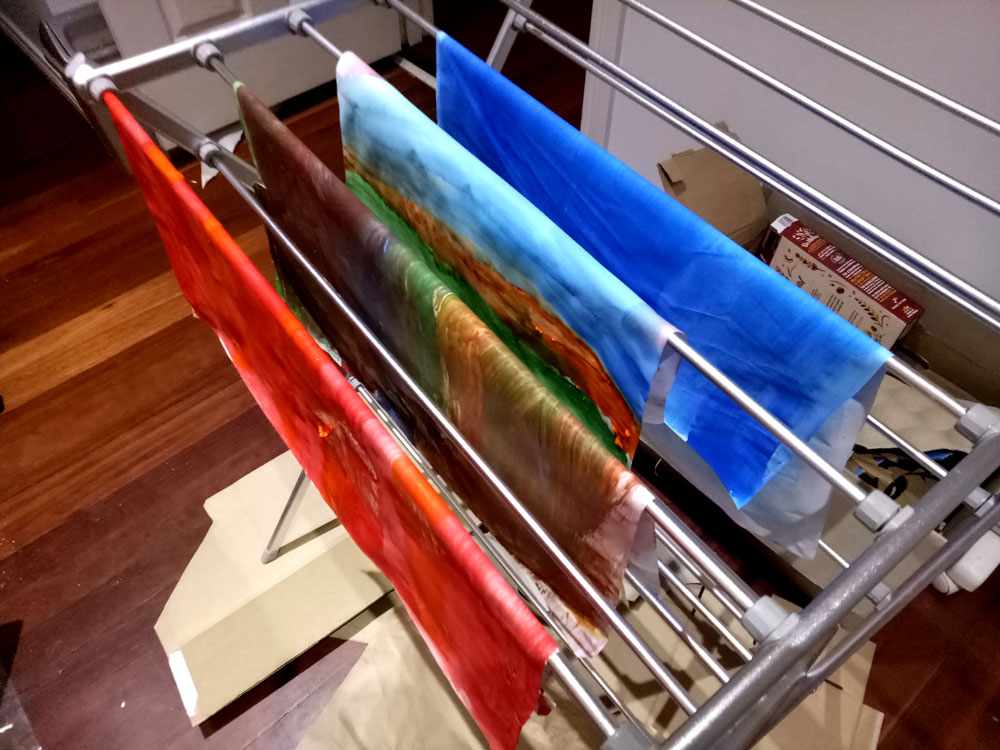
    Ingredients: Vegetable dye, homemade glue, salt, eucalyptus oil 

    Mix ingredients to desired consistency – it can be very runny to quite stiff it will be dependent on the materials you will be using.

    If you add calcium carbonate turns the paint from translucent to flat (non see through).

    This paint is very accessible, affordable for children and is non toxic.

    If you want to get into it more further reading / good reference material is Green Guide for artists by Karen Michel  Quarry press 2009 and Artists hand book a complete professional guide to materials and techniques by Pip Seymour Arcturus Press 2003 or go to my blog page on types of paint you can make. https://fernartz.com/make-your-own-paint/

    What is a preservative?  Helps stop the growth of mould and bacteria. Some other preservatives other than essential oils is sugar and salt have been used throughout the ages as a preservative for foods often used in bottling of vegetables.

    What is mould? Is a fungi such as a mushroom. Mould can be a health hazard causing you to sneeze or irritate the eyes. What is bacteria? Some of the first forms of life and can divide and grow very quickly however some bacteria can be harmful to humans.

  • Homemade Archival Glue

    Ingredients and utensils: 1. Wheat flour ( rice or corn flour can be used) I prefer wheat as the gluten gives stronger adhesion. 2. water 3. Eucalyptus oil (you can use any essential oil if it has anti-bacterial properties) 4. 1 medium sized pot 5. wooden spoon 6. a stove

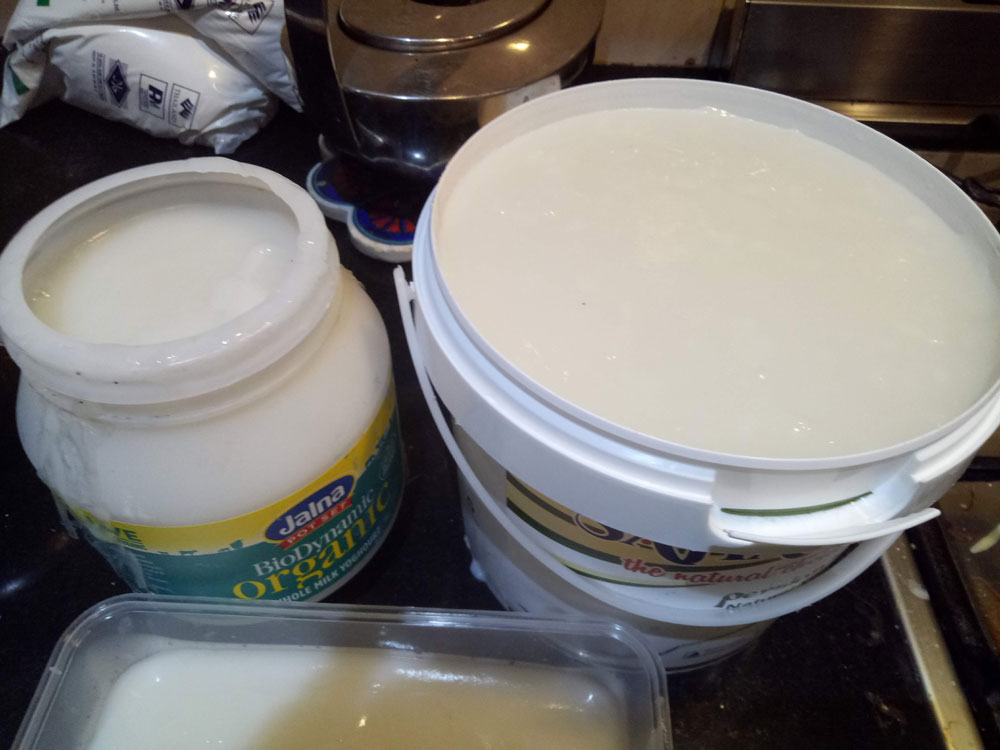
    Method: Mix all ingredients together in a small saucepan when cold -(250ml water, 2 flat desert spoons of wheaten cornflour and a couple of drops of eucalyptus oil) – Stir until there areno lumps (it appears a milky colour) Turn on heat and stir continously it will thicken. When it thickens keep stirring – stir for as long as you can 3 -10minutes while boiling this strengthens the glue. When clear pour into a container let cool. It can keep for up to a week in a cool dark spot. – Play with the amounts to get a glue for your specific purpose.

    The consistency of the glue will be dependent on the task. If binding paper, making paint you want a runny consistency. If making 3D objects its better if its stiffer – and dependent on what you are using it for – as the range of glue can be runny like drinking custard to tacky when you put your two fingers together there is a bit of resistance. The more you stir and cook the stronger the binding is.

    You can play with adding:   Adding sugar the glue adds a gloss however it can become brittle. Gelatin ( from either kelp or animal hooves) – brings strength to the glue however it will yellow and can shrink the paper. Honey gives elasticity to the glue.

    Traditional uses: Japanese scrolls – binding paper and silk together.  Persian/ Mongolian miniature art used a binder for watercolours to assist the non-bleeding of colours. Glue is used throughout South east Asia and is archivally sound. For contemporary works can be used in 3D art construction of puppets, Crankies, and all paper art, and installations.

    What is the binding element in wheat, corn or rice? Starch is a carbohydrate – made up of Carbon Hydrogen and Oxygen

  • Flash Story: Holding Bay: Fern Smith:

    Flash Story: Holding Bay: Fern Smith:

    Flunking down on the soft day-couch butted up to the large sunroom window my eyes cast to big sky, realising I am in holding bay.

    Batting away suggestions of doing words, a complete compunction about verbs. Always been a little that way inclined all my life finding ways to wriggle out of the ‘around the house’ jobs, jobs in general and never rounding myself out as a full “I am a…” person.

    Slithering away at parties when discussing ‘what do you do?’  People say I am an artist. Yeah right not so good as selling ‘work’. I tried once knocking door to door with my leather briefcase full of A4 of vivid ink washes of grotesque people, didn’t go down too well. Many a door in face.

    Tried car boot sales. Laying out a dusty smelly picnic rug that had be scrunched up in the back of an unkempt car while carefully placing my grotesque scantily clothed figures down, all laid out into a story, of sorts. Mothers yanking arms of their transfixed children goggling at ‘contemporary art”. As the day waned, bored, I pack up with the other sad sack sellers. No extra cents.

    My mind wonders into constant long sentences of doubt. What am I holding onto where do I think I am going why am I so adverse, cryptic, who am I anyway, some upstart with no ambition, who wants ambition, do I want to live in a house where eyes stare and haunt, truant, never staying anywhere that long, people asking questions.

    Ah that was all so long ago now.

    The couch is my sea. Finessed in the art of scuttling sideways. An artist of non-doing. An artist of note. The sky draws me in, soaring with the pelicans riding a draft in a unison v, synchronised flying, so way up high. The storm clouds approach. Where do they go to when it rains?
    The operation is in a few weeks.

  • Joy Hester Happy Belated Birthday: The year we closed our doors

    Joy Hester Happy Belated Birthday: The year we closed our doors

    What: Joy Hester: Remember Me – curated by Kendrah Morgan

    Where: Heide MoMA Melbourne

    When: 30 June 2020 – 4 October 2020 (new end date yet to be announced).

    Temporarily closed due to COVID19 Melbourne stage four lock down

    Forward note: The Curators:

    I feel like calling them “the curettes” as it is with surgical precision they have researched and dissected Joy Hester’s artwork, placing her alongside her male contemporaries. One day Joy Hester will gain international status like Nolan or Whiteley. Not today our doors are closed.

    2020: Kendrah Morgan: Joy Hester Remember Me: exhibition Heide MoMA

    2005: Denise Mimmoccchi: ‘In Defence of the Unwritten History”: Article: Woman’s Art Journal, Fall 2004/Winter 2005, Volume 25, No.2, published by Woman’s Art Inc. (USA)

    2001: Kelly Gellatly: Leave no space for yearning – The Art of Joy Hester: exhibition Heide MoMA

    2001: Deborah Hart: Joy Hester and Friends: exhibition National Gallery of Australia

    1983: Janine Burke: Joy Hester:  Greenhouse Publications, Melbourne

    The Review: Happy Belated Birthday

    The 21th of August was my birth mother’s hundredth birthday, Joy Hester. Joy died at forty, I was six, I am now sixty-five and my son is forty-two.  I have never celebrated her birthday, I rarely speak of her, shy away from the curious, hide my mother inside of me.

    Kendrah Morgan, the curator of Joy Hester: Remember Me, generously took me on a private tour of the largest exhibition to date of her artwork; the day before the first COVID19 lockdown in Victoria.

    The glaring light in the car park closest to the Albert Tucker wing, where the exhibition is held (irony), contrasts with the subdued tones of the exhibition walls painted smoky grey highlighted with musty pink and soft blue, the lights are set low not to burn pigment and crackle the fragile papers, the precious creations. This gave a feeling of walking inside my mother. A womb. It was an overwhelming feeling of deep acknowledgement, sadness, relief, and joy to externally feel her heartbeat, her soul. I thank Kendrah for giving me that experience.

    Joy Hester’s work is deeply analytical. This is achieved through exploring the female form, leaving you with a question mark on gender. The works are executed deliberately, swiftly, and deftly with inks and water colour. There is an emotional urgency/agency as if to catch the water before it hits the floor. To express your work in this way takes practice, skill, and persistence. This is evident in her depiction of lovers, from 1948 and continuing until 1956—it was a body of work she continuously went back to, as if wresting with a query that is hard to catch. A woman’s place in love, in relationships. Most of the works bar a few place women central to the theme, in the foreground, front and centre. There is one work, of two women interestingly, in equal position in the foreground: cat. no.109 Love (Heart group) c.1949.

    I propose Joy Hester’s work is a precursor to feminist art. In Hester’s work ‘woman’ is the investigated, the protagonist. She visually questions the gender divide, plays with status, moves and changes the status. An early rendering of this is in a c.1942 Street Scene: cat. no. 17. The work is possibly set in St. Kilda, where she lived with Albert Tucker. It is a black ink wash. You cannot miss the billboard in the foreground with a naked woman except for the lacy underwear. We automatically think place, time, and work, most likely a prostitute. But is it? We know that type of advertising would not have been allowed then, through the strict censorship laws in place. Does it indicate ‘women’s role’? How women are perceived? What is their station in life? Is it challenging stereotypes? What are our views on prostitution or scantily clad women be it then or now? The woman has a smile on her face. Street Scene, a simple yet complex work. Women are not ‘objects’ in Joy’s work they are the central tenant. It is a work worthy of exploration and further investigation.

    The works in the exhibition are in a scholarly way grouped together to make it easy for the viewer to digest the art, question the art, see the creative process. There is a cluster of works titled “Interiors with figures”.  Kendrah states “… with the figures projecting a sense of vulnerability, internal disquiet and sometimes claustrophobia…” There are three works [cat. no. 21 (Seated woman) 1943, cat. no. 22 Woman Resting 1943, cat. no.31 (Seated girl) c.1944] of women in bare rooms or bedrooms, alone and empty and quite well dressed. There is a sense of women waiting. What are they waiting for? … loved ones to come back from war? Waiting for life to begin?  Resting? Are they waiting for death?

    In that grouping there is a magnificent work, (Three figures in a chair), c.1944 cat. no. 32, which appears to be a naked family all sitting in one chair and the background is black, dense. None of them appear to be happy yet they are comfortable. The year before Sweeney was born (her first child), the year before war ended. Was Hester pregnant? Was she questioning place and position? Are they trapped? Is it questioning the family construct? It is not an easy work.

    Kendrah Morgan frequently pointed out how Joy’s work kept going back to the senses being integrated into her visual story. Joy hardly ever painted noses as there was no need—it didn’t add to the narrative, sight, the eyes, were the main sense strongly conveyed, however there are standouts to this such as Girl Holding Flowers 1956, cat.no.125: you can almost smell the posy. The languid lazy arm hanging heavy over a shoulder, giving weight to the touch explored in (The embrace) from the Love series I cat. no.110,c.1949.

    My mother was not a commercial artist, she was a woman artist standing often alone with her male contemporaries, she never backed down. Hester’s work was not valued until forty years after her death, the exhibitions twenty years apart. Women flock to the exhibitions drinking in their language. She is a feminist 101 charging well before the others, alone. I hope lockdown is lifted to enable you to stand before this valuable work that gets shown so rarely and is still open to questioning.     

    Post note:

    Many flourishings go to the women curators who bastion women artists. It is their time and commitment that places women alongside men in art. It is interesting to note there are more women artists than their male counter parts, however there are still fewer represented in national and state Museums and Galleries.

    Fern Smith 24/08/2020

    Links: to Heide MoMA https://www.heide.com.au/exhibitions/joy-hester-remember-me and Scroll down the page to download the Room Sheet – the catalogue of Joy Hester Remember Me

    PST: Collage by Fern – most of the images are held at Smith-Hester archive Heide MOMA