When going through change you tend to fall back on what comes easily. For me that is drawing. While drawing one can allow the mind to fly free or listen intently to what is around you.
I am emerging; from COVID-19 as part of our life with the lock downs in Victoria appear to be easing. In the past twelve months I have relocated away from my shop front studio if fifteen years in Merlynston Melbourne to Portarlington a Port Phillip Bay village whilst in is mix undergone a major operation. All these changes has had a huge pact on my art practice.
The time moving away from my studio has given me a great deal of time to reflect and ponder the best way for me as an artist to move forward. Concurrently with my pontificating global and regional human rights issues have emerged “black lives matter” and “enough” showing the fragilities of our liberal democracies while playing out on in media.
My change and the worlds change, all moshing around in my head, brings me to developing four conceptual art bodies of work around common everyday Australian terms; “to hot to handle”, ‘’a rod for my own back”, “drunkard” and “stain”. I expect they will take about awhile to fully mature and present in the material form. As an artist is is called the development and designing phase. Where research such as looking at: the personal is political, the personal is private and slang usage in the everyday. What would be the best vehicles for this creative participatory exploration?
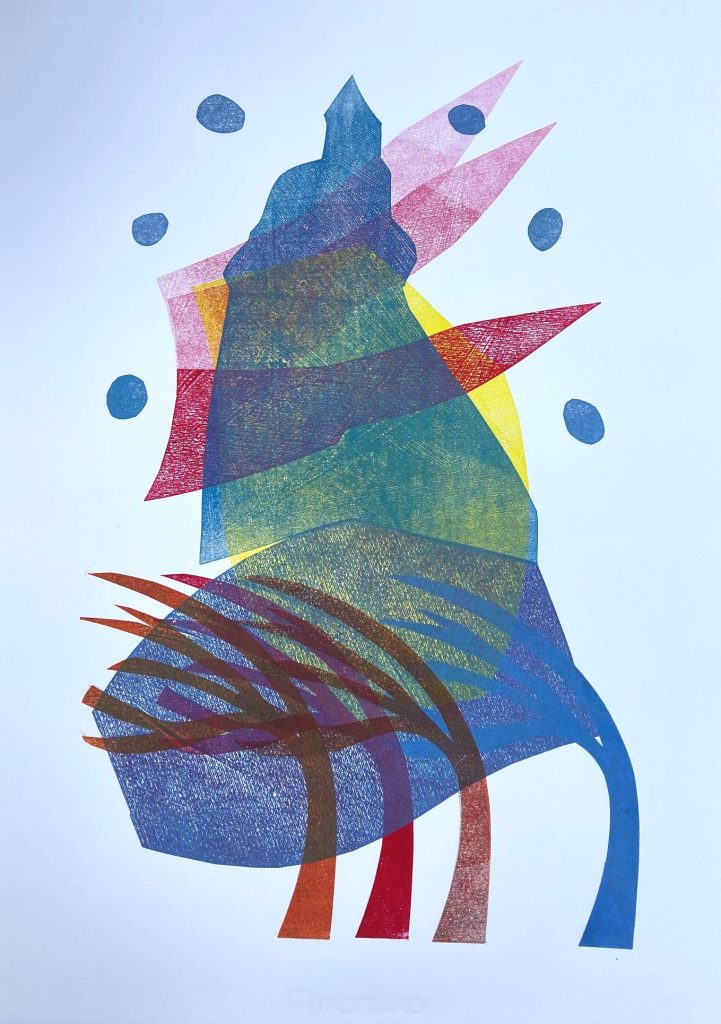
By Sheena Mathieson: Titled-No.50: Media-Mono print on 220gsm Fabriano Rosapina: Size- 50x70cms:
Poetics of Shape by Sheena Mathieson is an online exhibition of fifty-two mono prints, fifty by seventy centimeters. The works are joyous, light, playful, colourful and expertly executed.
Poetics of Shape plays with Poetics of Space by French philosopher Gaston Bachelard’s. Poetics of Space explores our relationship to the physical building of home. A famous extract of Bachelard’s “… better to live in a state of impermanence than in one of finality…” Artist Sheena Mathieson has keenly felt the restrictions and impact of COVID 19 living and working in inner Melbourne, teetering on the edge of the CBD. Melbourne has experienced one of the longest COVID19 lockdowns in the world to date.
Mathieson’s fifty-two mono prints stand on their own in uniqueness. Mono printing in the west dates to the sixteenth century re-emerging with Edgar Degas placing them into the modern art movement. Mono prints are not print runs of multiples rather one offs. Contemporary mono prints have a story of simple shapes often with the use of one or two colours.
Artwork No.50. appears simple, light, and joyful belies the precision. Her use of colour is lightly applied giving way to the transparency of other colour. Mathieson’s work has a 1970’s flavour in shape however without the use of heavy blocks of colour such as Berenice Sydney’s work nor does it reflect the 1990’s blurred line like Mark Francis when both decades saw a re invigoration in mono prints. There are a least ten markings (print pressings) using four different colours expertly executed. The works are simple yet controlled each mark is cross hatched, giving a light textural feel of cloth. The work encapsulates movement, references the figurative, the landscape and is abstract. Its like a cloud, we can imagine into it.
These intriguing works are familiar yet original, comforting yet stark, homely yet precise. Mathieson has had fun playing with the Gaston Bachelard’s philosophy shedding light within the home during this dark historical moment of COVID19.
I fell upon dyeing and staining when I rewashed my paint rags instead of throwing them out, the pigments stayed in.
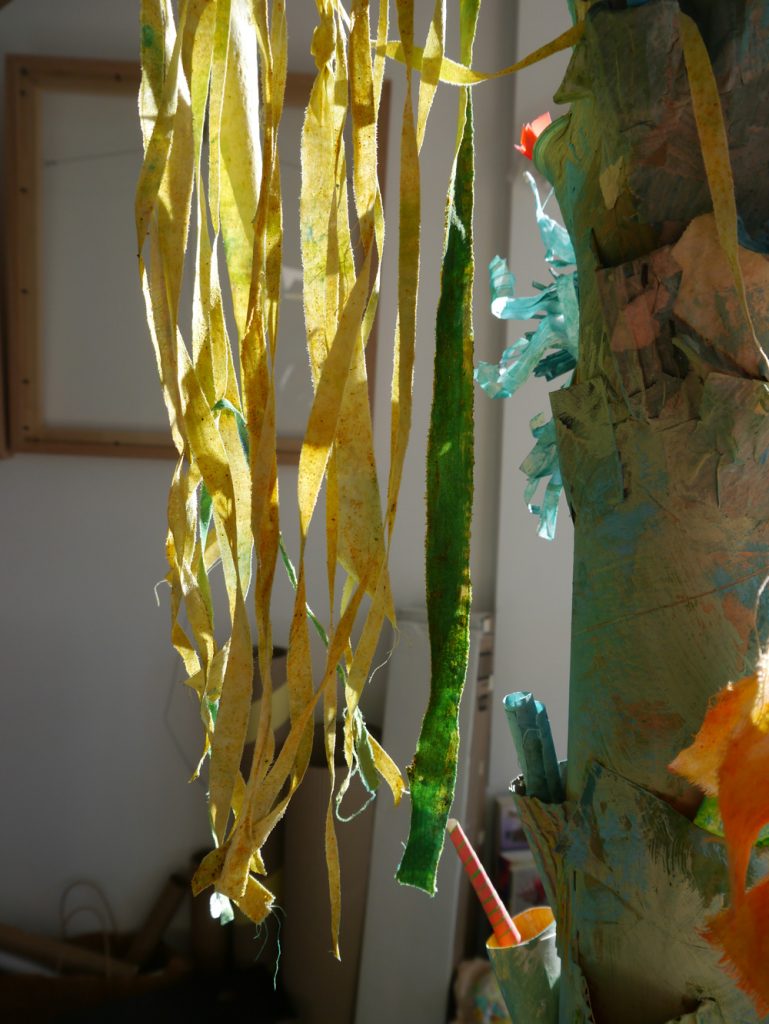
Turmeric and tea stained tresses
Paint rags and Tea
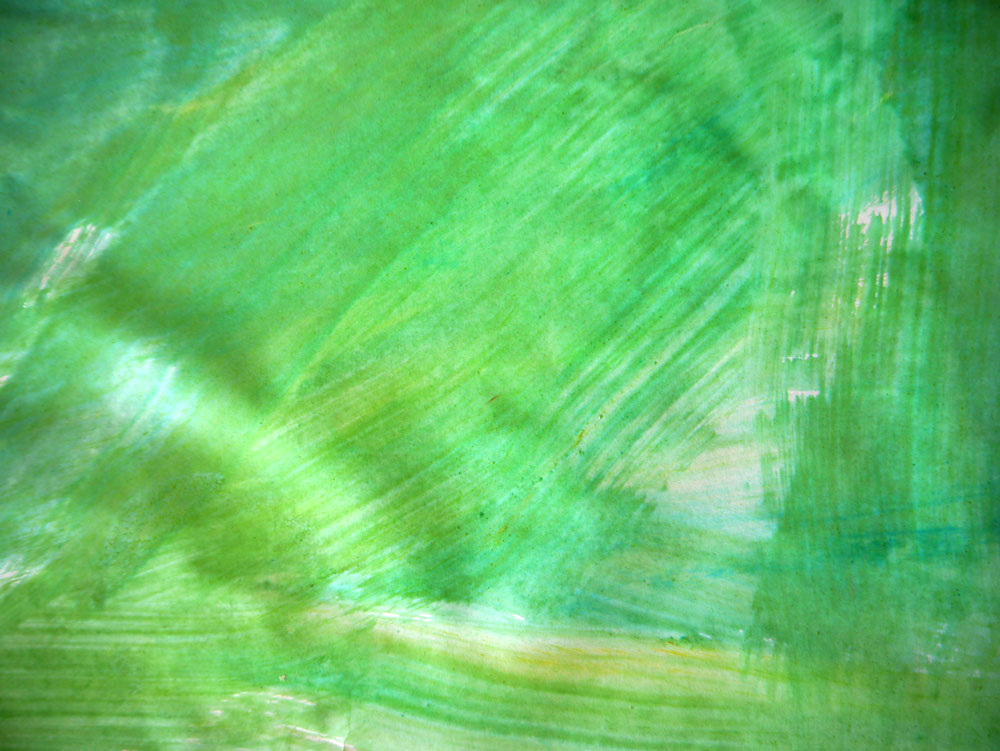
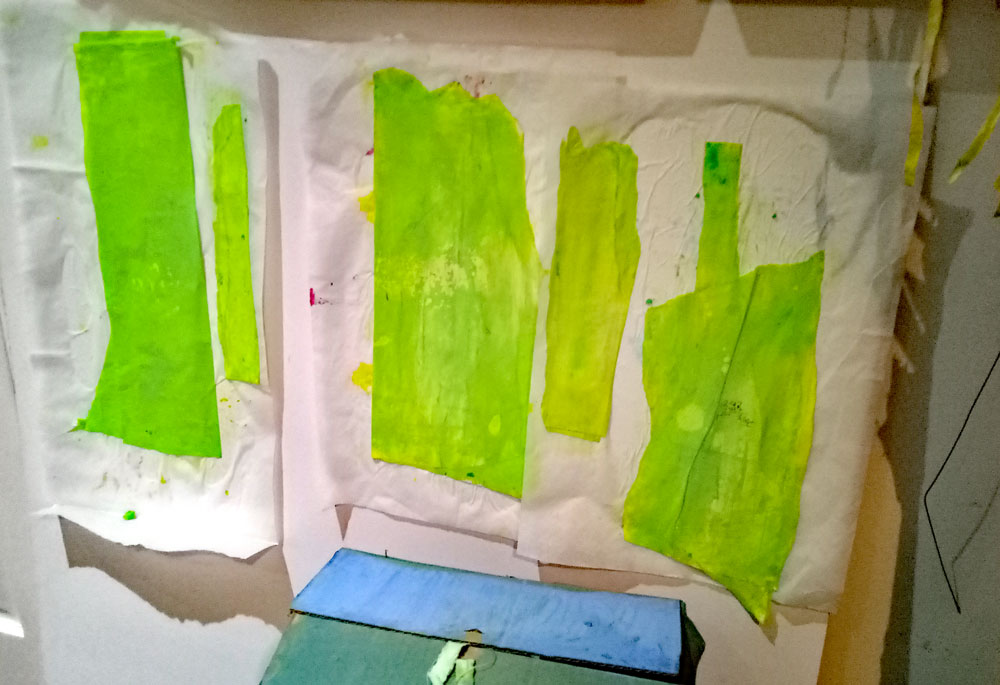
Food colouring and handmade glue
food dye/colouring and handmade glue
Paper creation
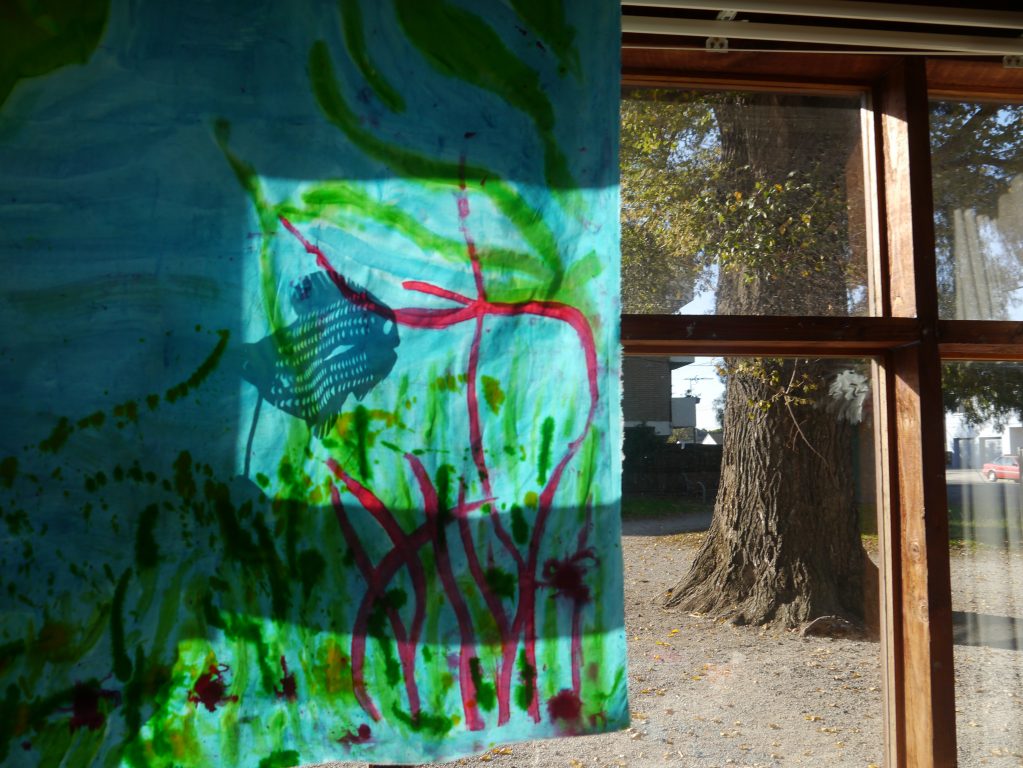
paint rag used for beneath the sea
beneath the sea 2018
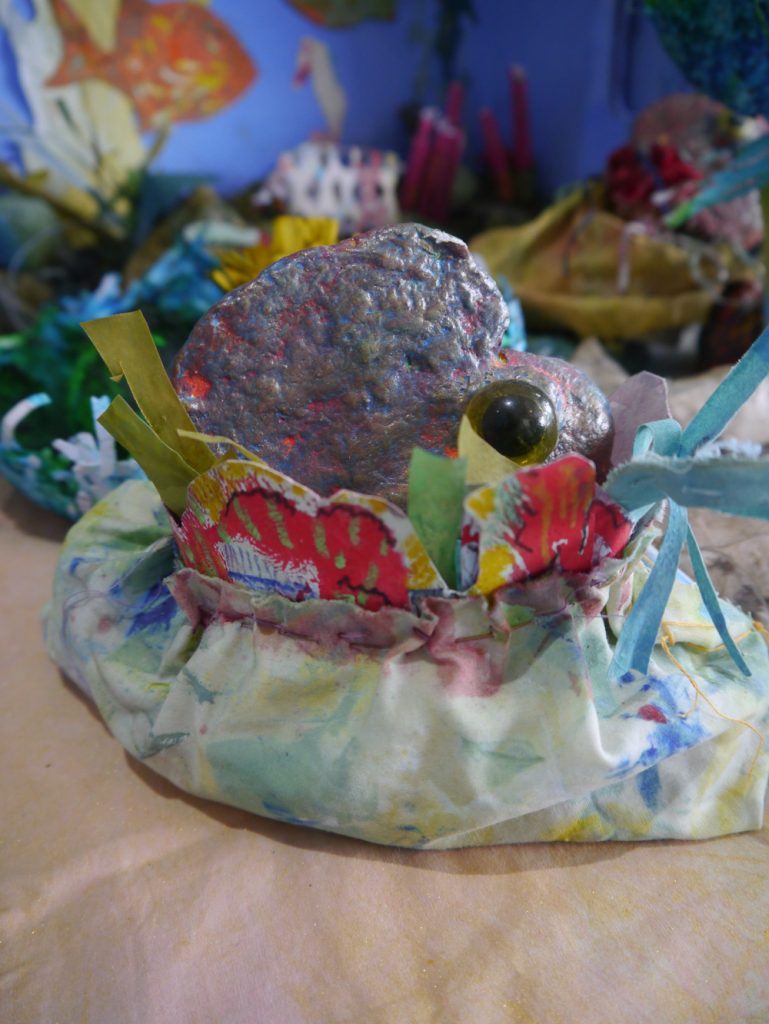
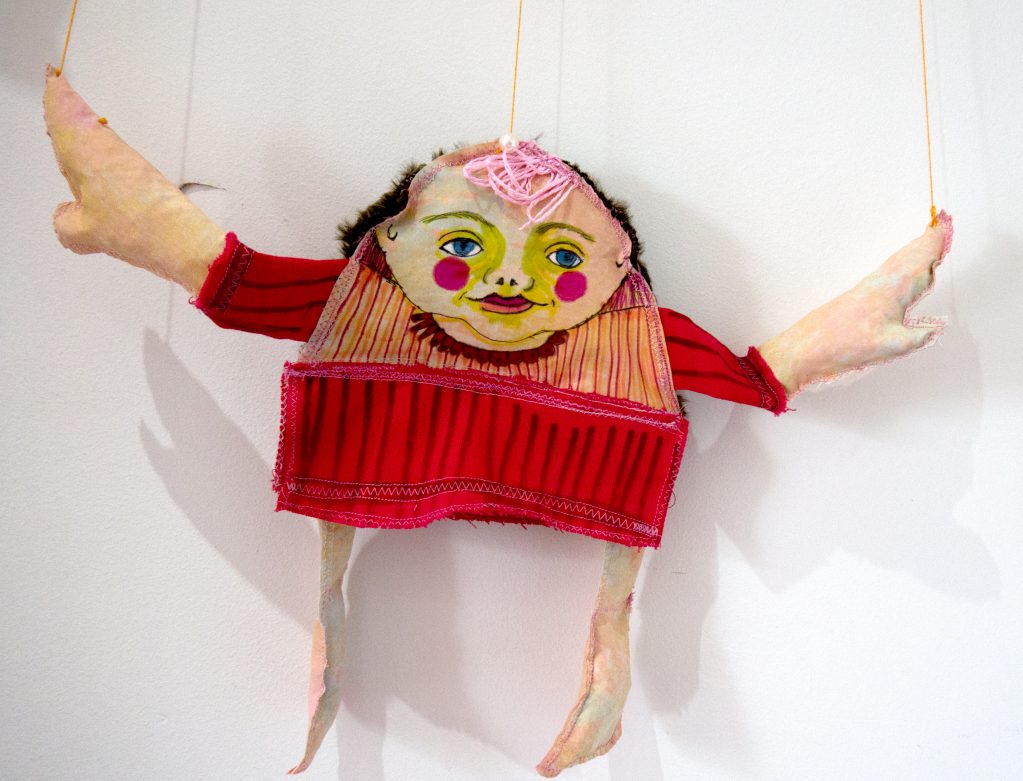
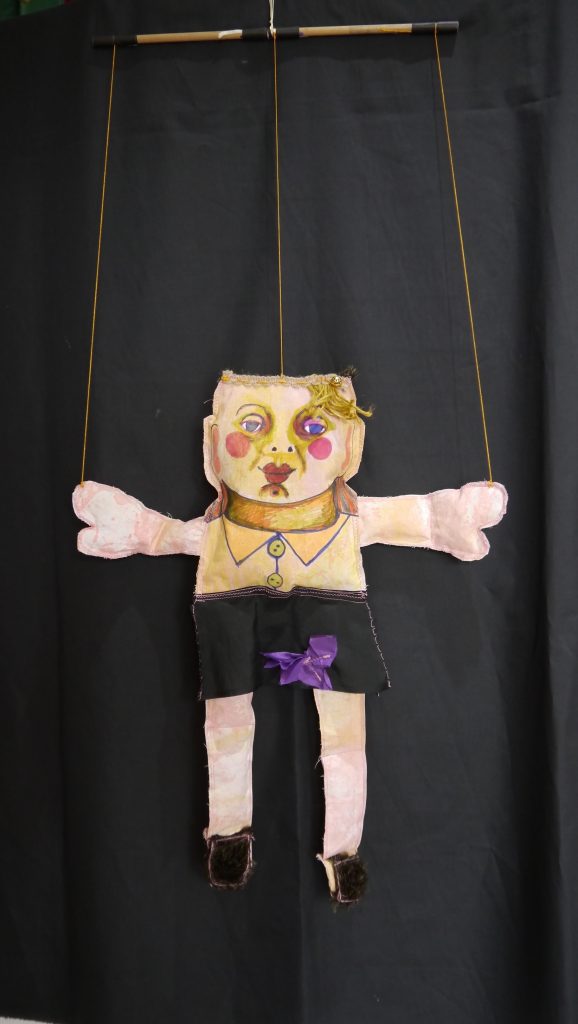
Puppet 2016
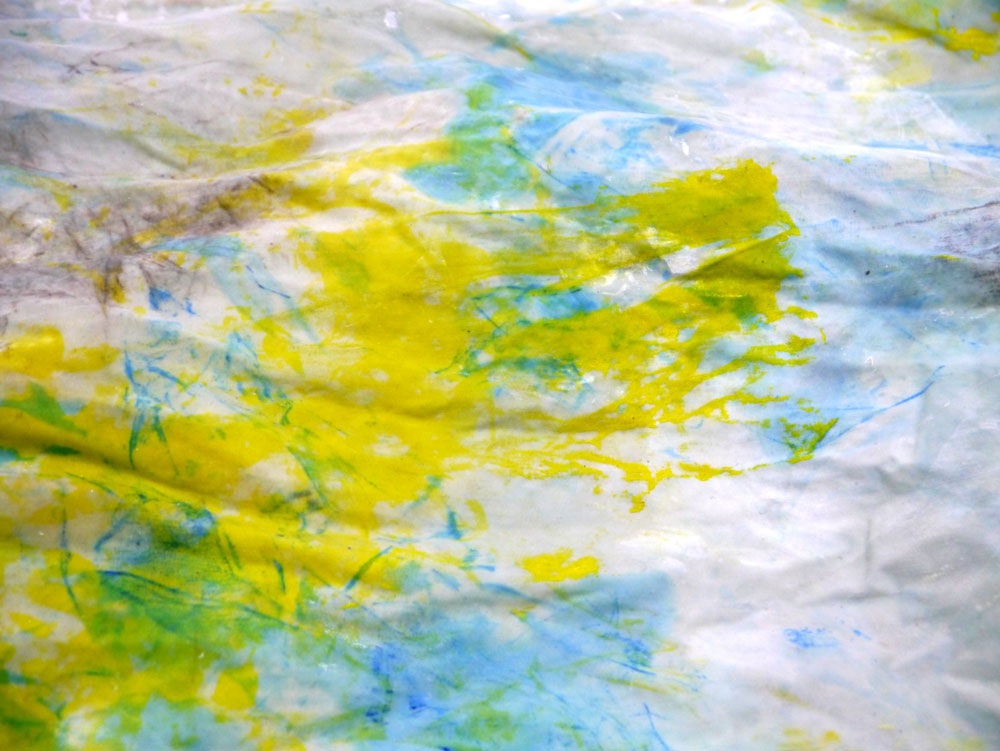
glued on baking paper pull off when dry
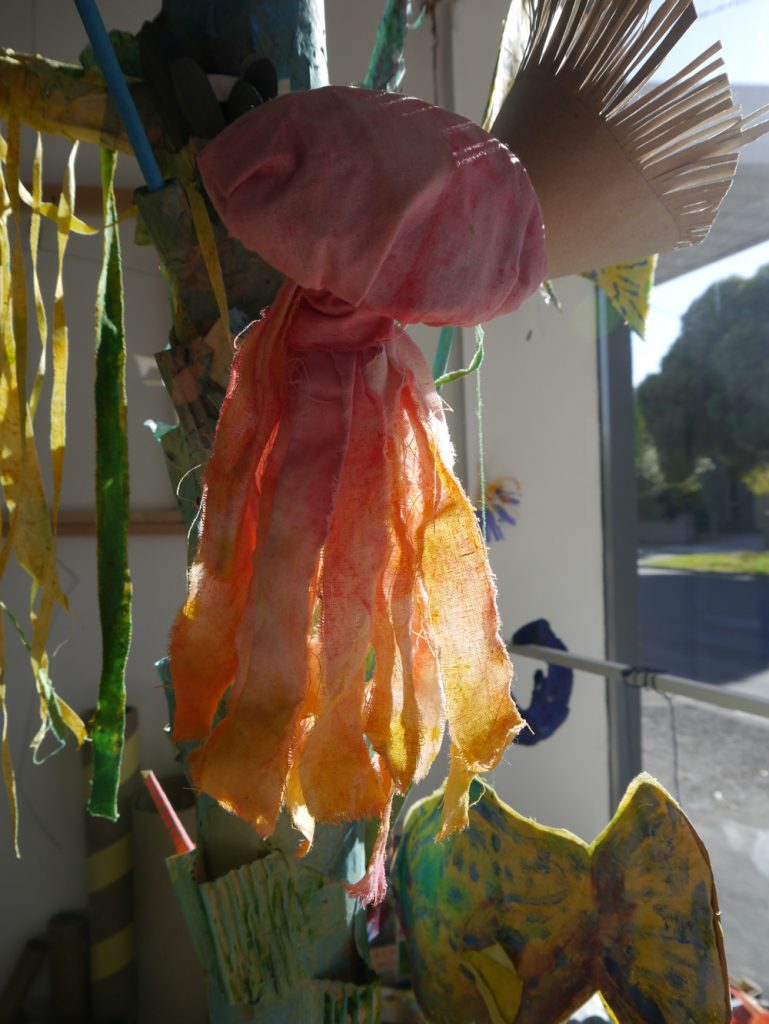
Puppet 2016 – paint rags rewashed
Play re-use recycle
You know when you spill something on your clothes, and it will be hard to get out – there we go perfect dye or tint. Try left over coffee and tea. Try soaking beetroot skins and turmeric. On natural dyes there are books if you find you wish to further pursue the craft however its good to just muck about with your left-over vegies and beverages first. Playing and making a mess is a good start.
Try boiling your vegetable or plant with water or vinegar or a combination of both. Try rusty nails soaked in vinegar. Or just leave soaking in the sun for a few days.
A person who made beautiful scarves used gum leaves and seaweeds and said ‘ just wet your cloths or papers and tie them up with the leaves until dry let the magic the magic just happens’
If you want them to dry flat I dry on on no porous board using a large paint brush to get the bubbles out. Or, use baking paper and pressing between books. I have used this for small squares for making covers for handmade books.
If you do not have the time and are rummaging around in the food cupboard you may come across food dye for cakes – they are a perfect starting point and have a beautiful hue.
To learn the art of dyeing process, an excellent book is The Handbook of Natural Plant Dyes by Sasha Duerr – published by Timber press 2010