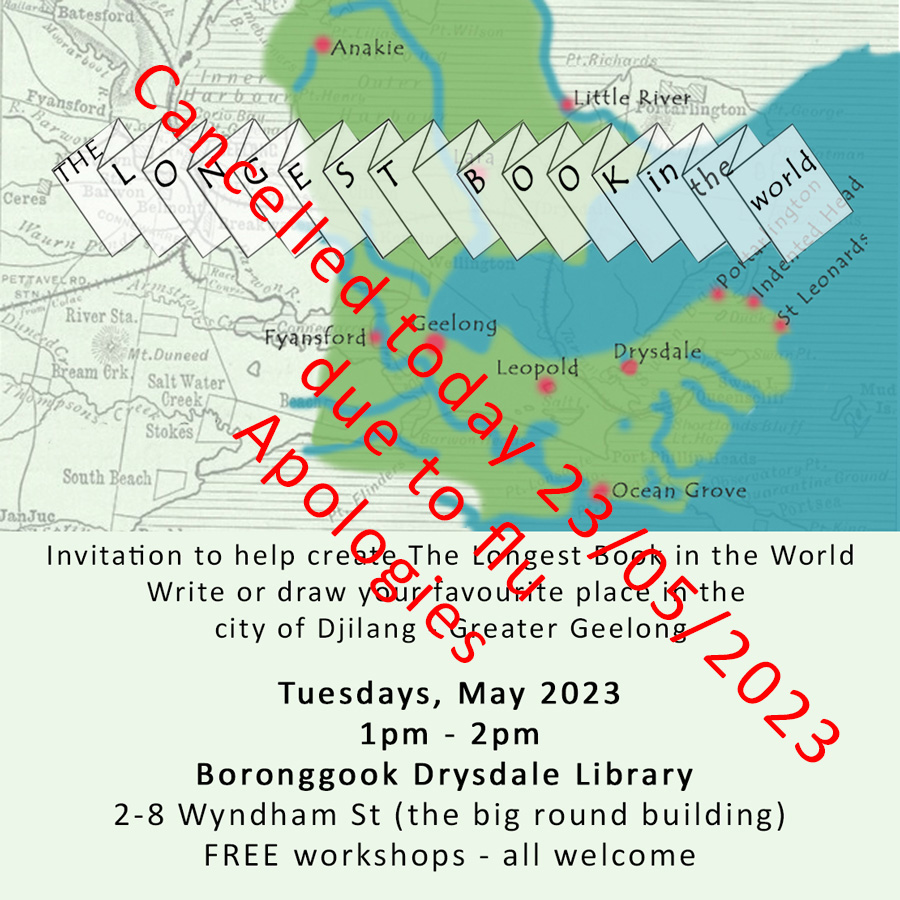
Apologies – Longest BooK in the World cancelled today at Boronggook
Drysdale Library and Friday at Drysdale Museum..
Apologies – Longest BooK in the World cancelled today at Boronggook
Drysdale Library and Friday at Drysdale Museum..
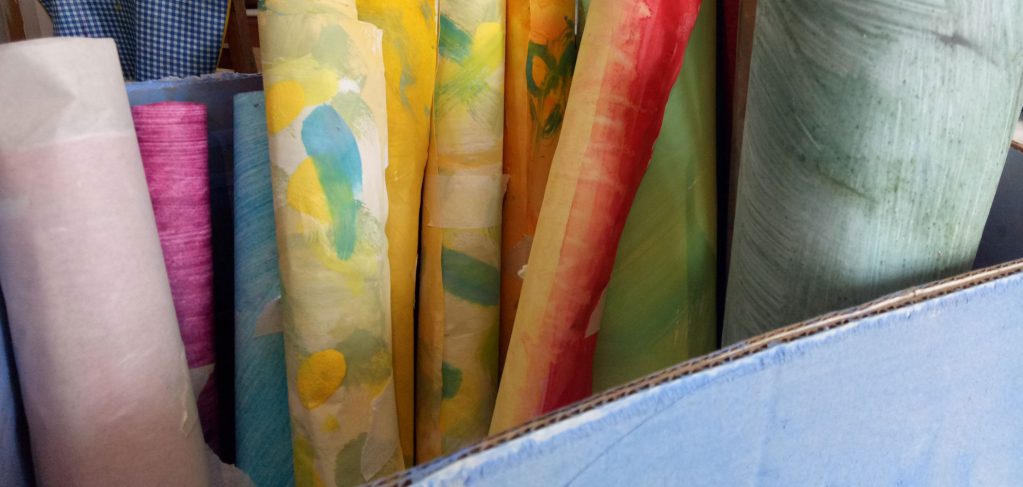
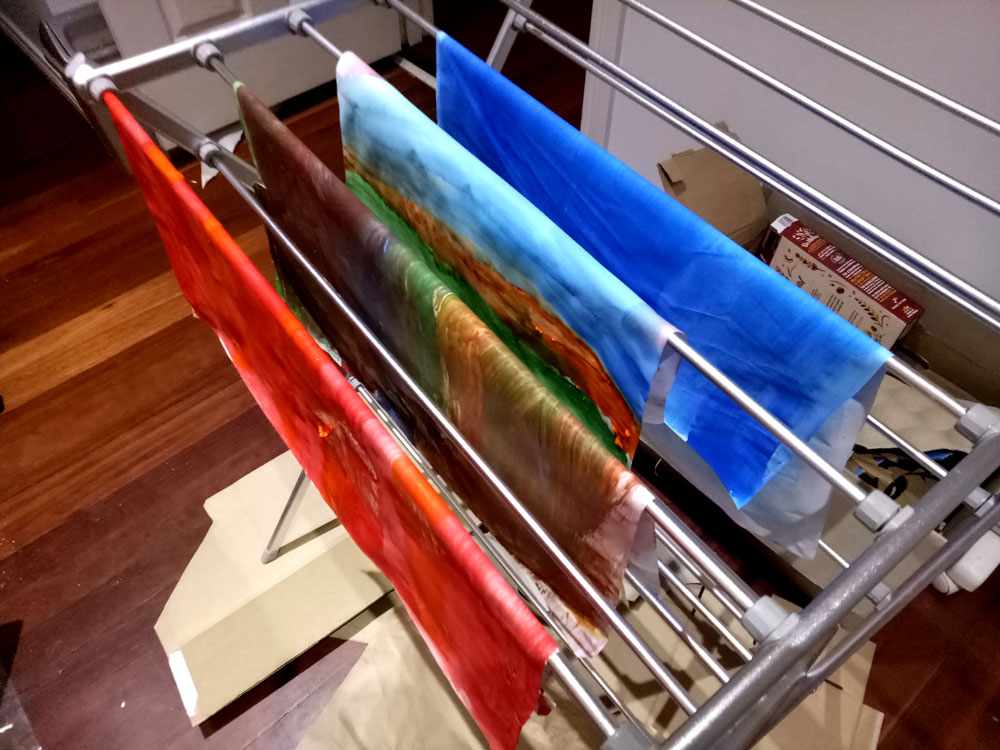
I fell upon dyeing and staining when I rewashed my paint rags instead of throwing them out, the pigments stayed in.
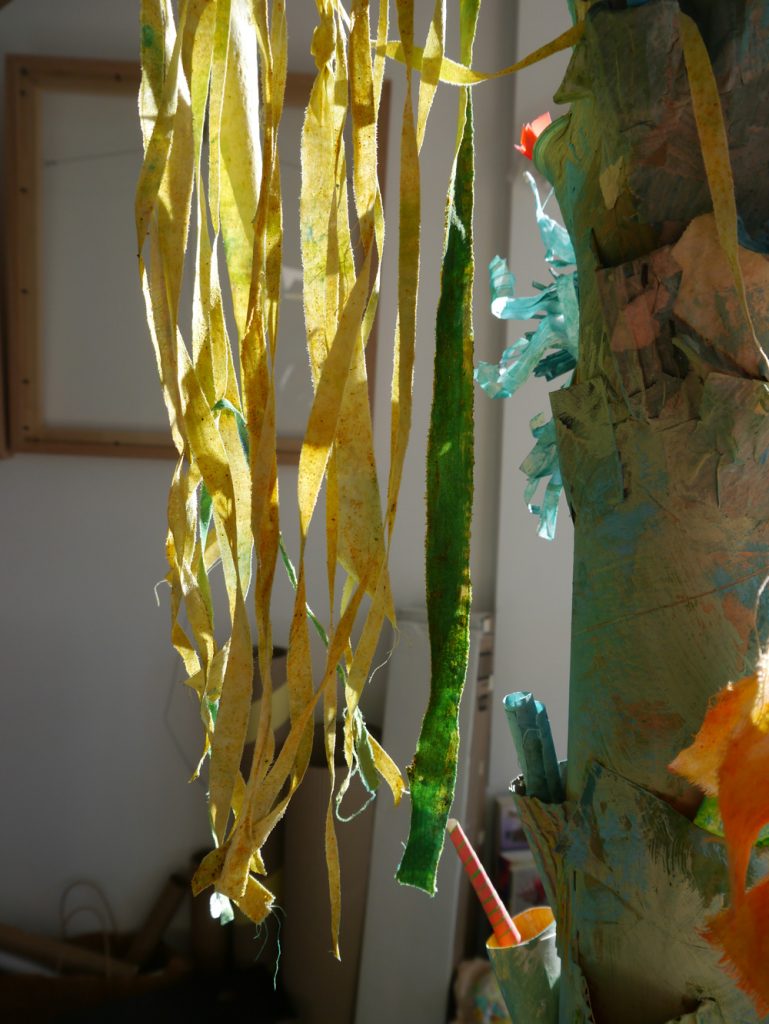
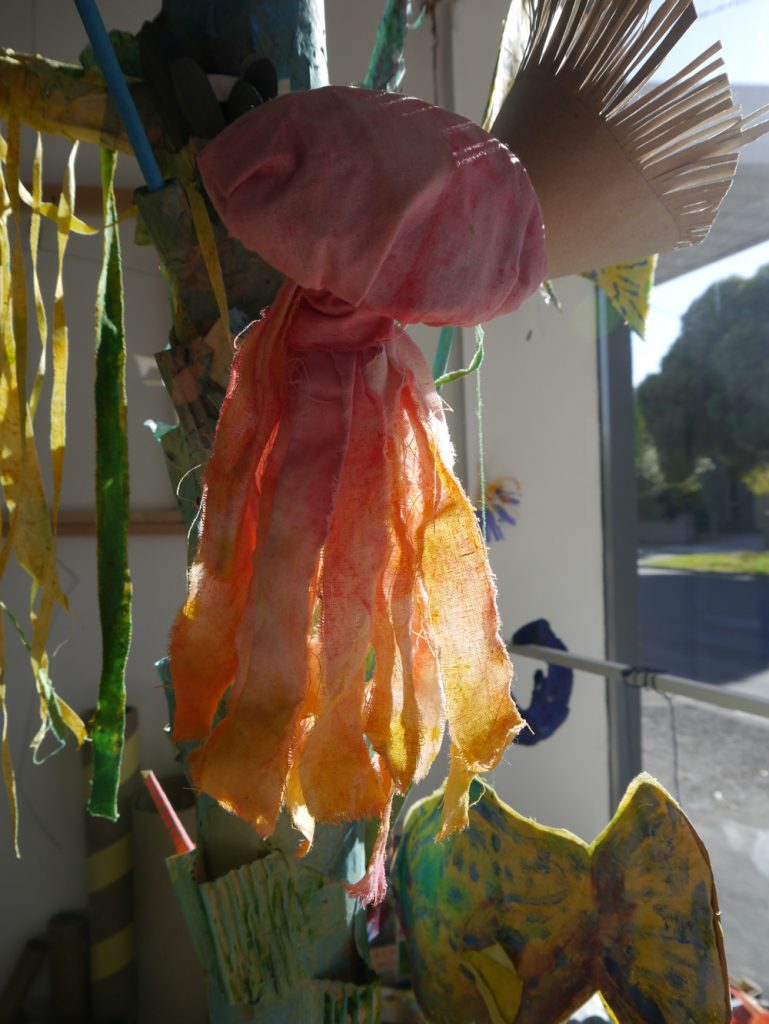
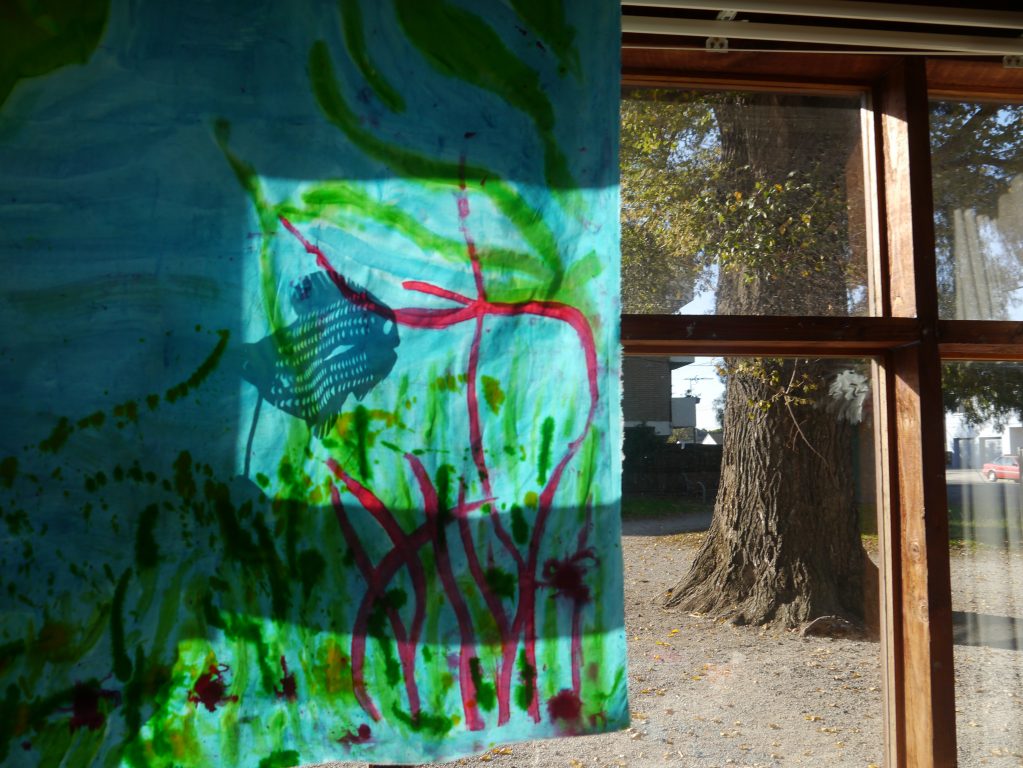
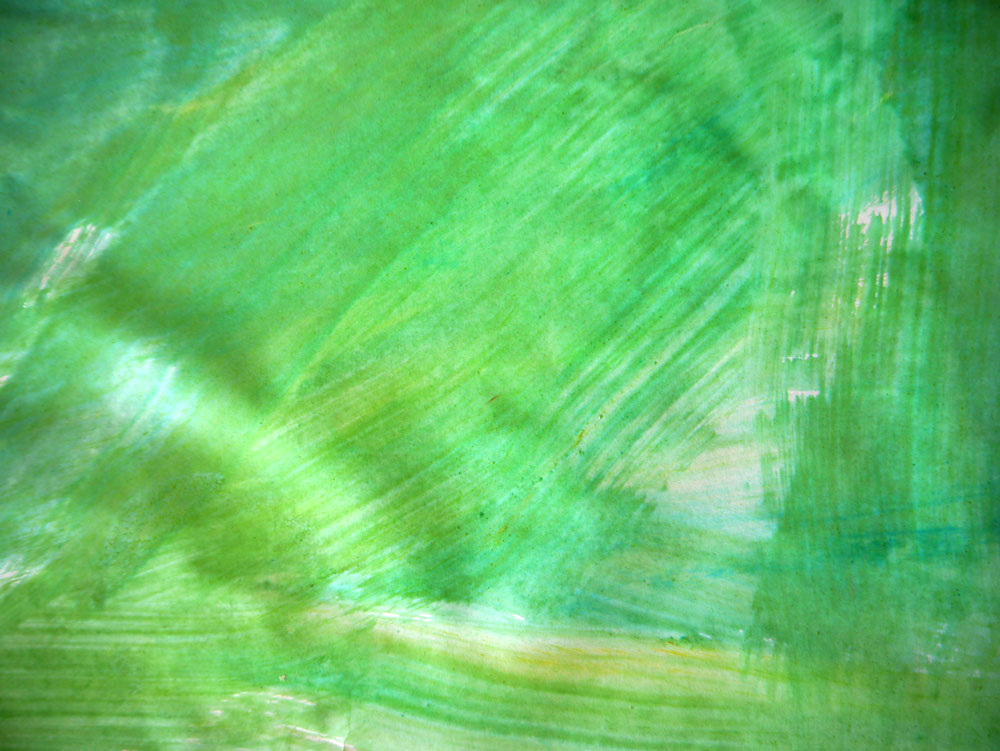

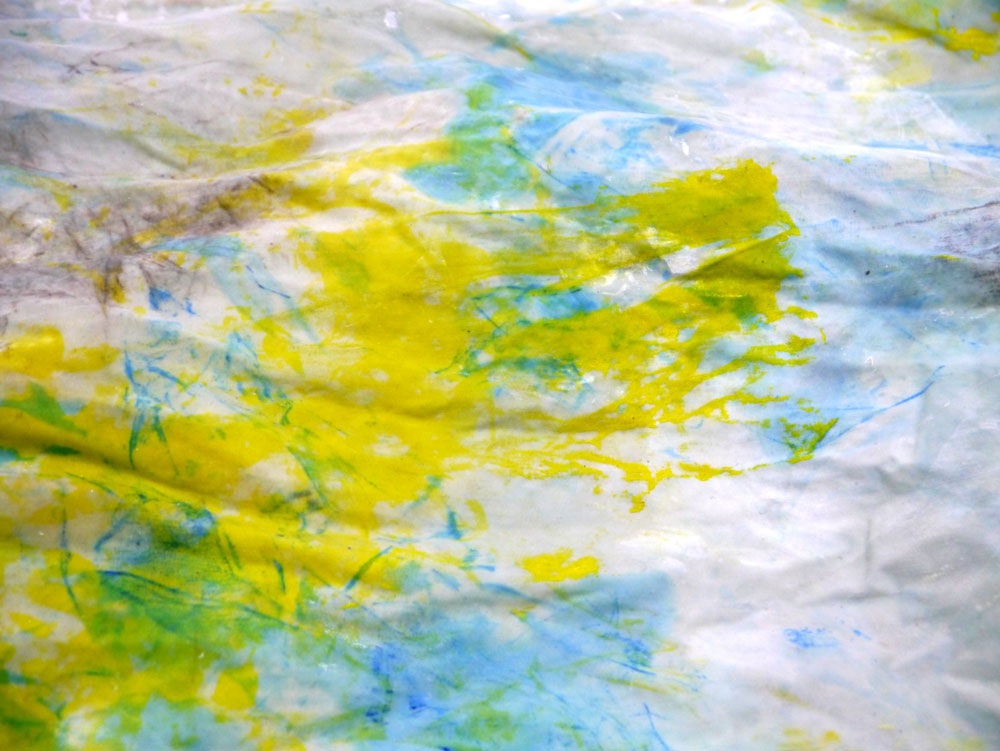
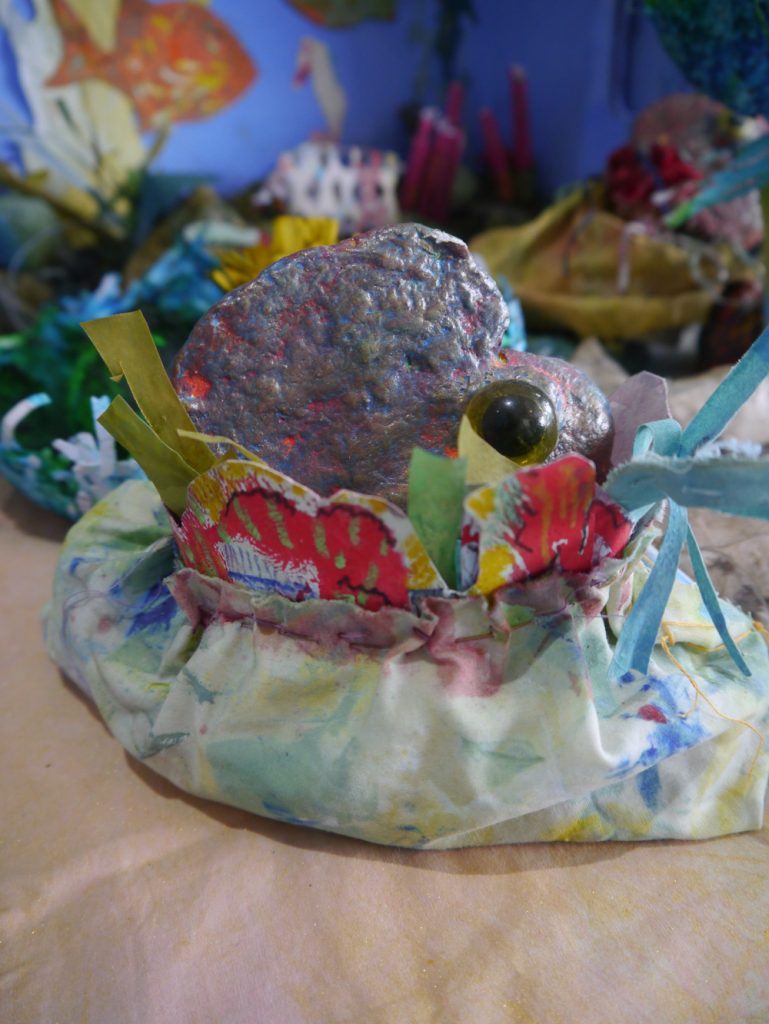
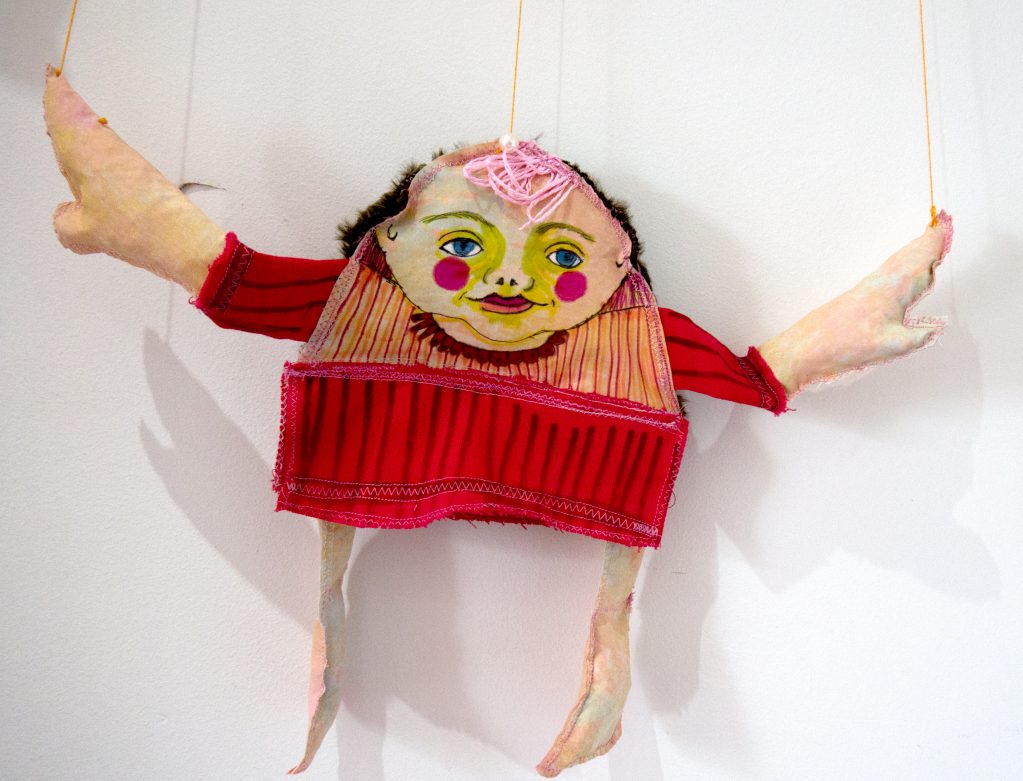
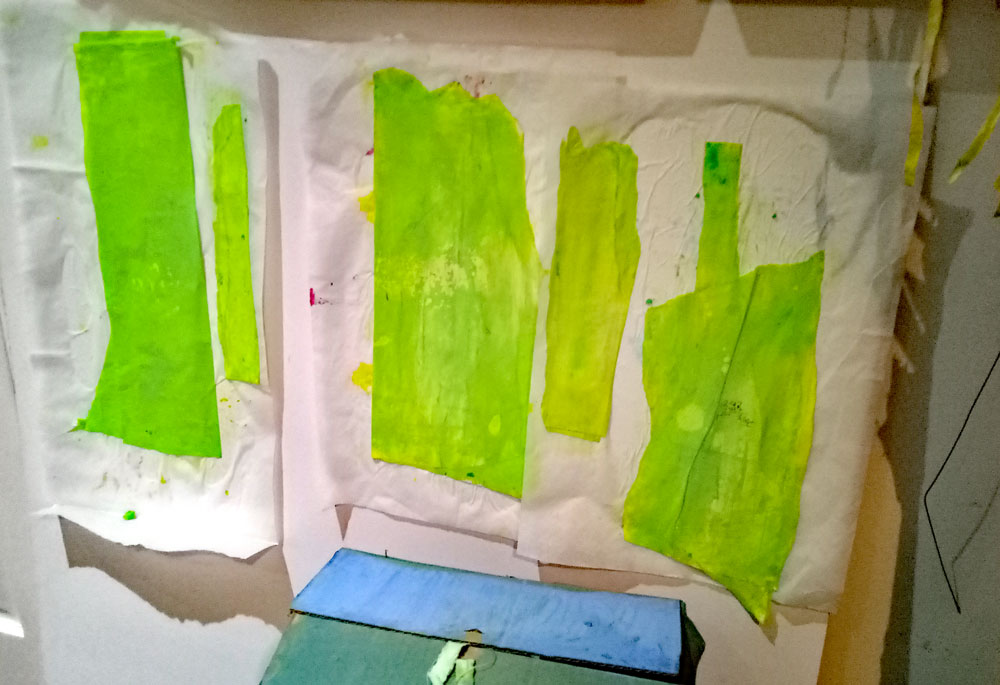
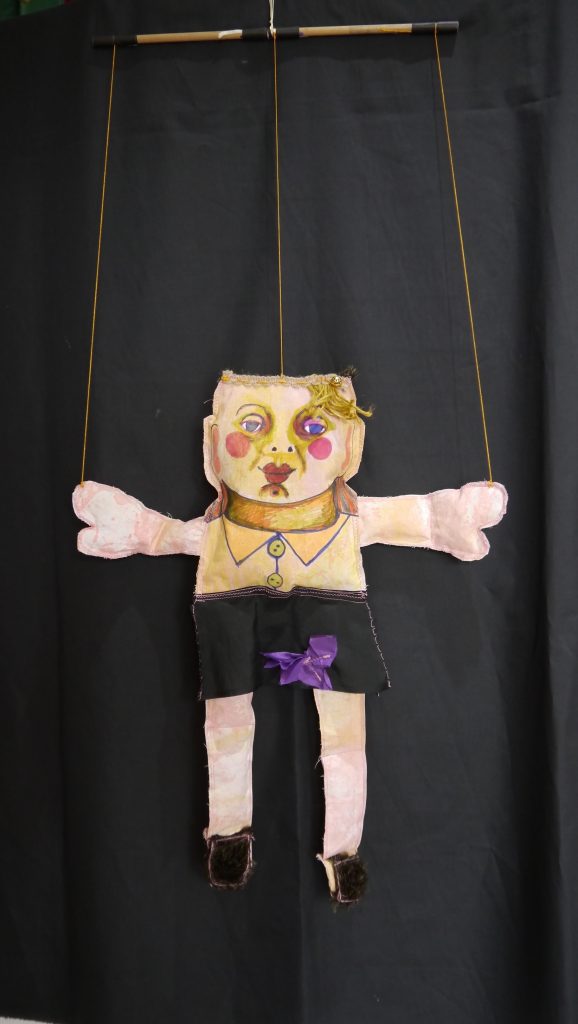
You know when you spill something on your clothes, and it will be hard to get out – there we go perfect dye or tint. Try left over coffee and tea. Try soaking beetroot skins and turmeric. On natural dyes there are books if you find you wish to further pursue the craft however its good to just muck about with your left-over vegies and beverages first. Playing and making a mess is a good start.
Try boiling your vegetable or plant with water or vinegar or a combination of both. Try rusty nails soaked in vinegar. Or just leave soaking in the sun for a few days.
A person who made beautiful scarves used gum leaves and seaweeds and said ‘ just wet your cloths or papers and tie them up with the leaves until dry let the magic the magic just happens’
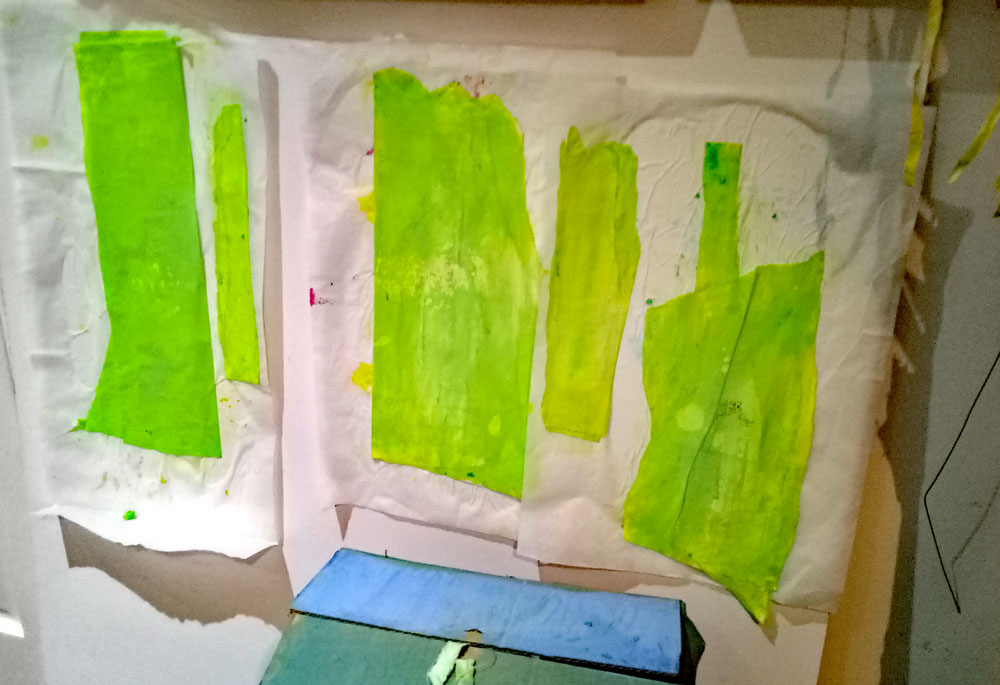
If you want them to dry flat I dry on on no porous board using a large paint brush to get the bubbles out. Or, use baking paper and pressing between books. I have used this for small squares for making covers for handmade books.
If you do not have the time and are rummaging around in the food cupboard you may come across food dye for cakes – they are a perfect starting point and have a beautiful hue.
To learn the art of dyeing process, an excellent book is The Handbook of Natural Plant Dyes by Sasha Duerr – published by Timber press 2010
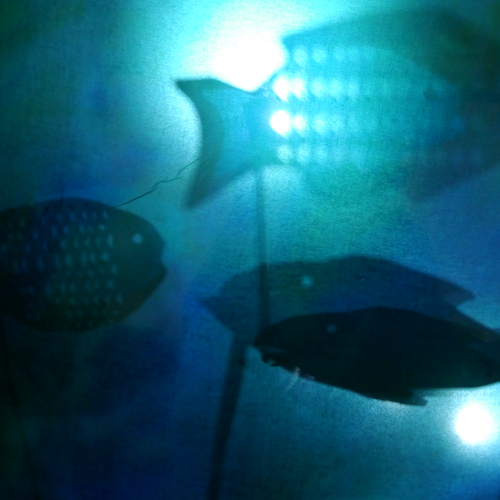


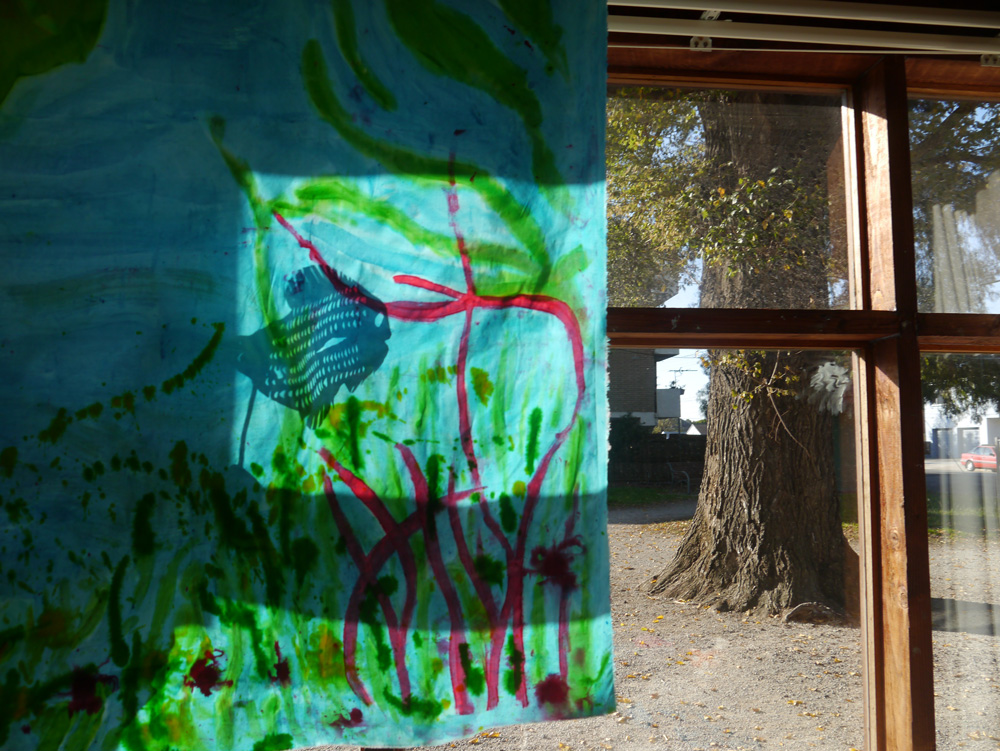
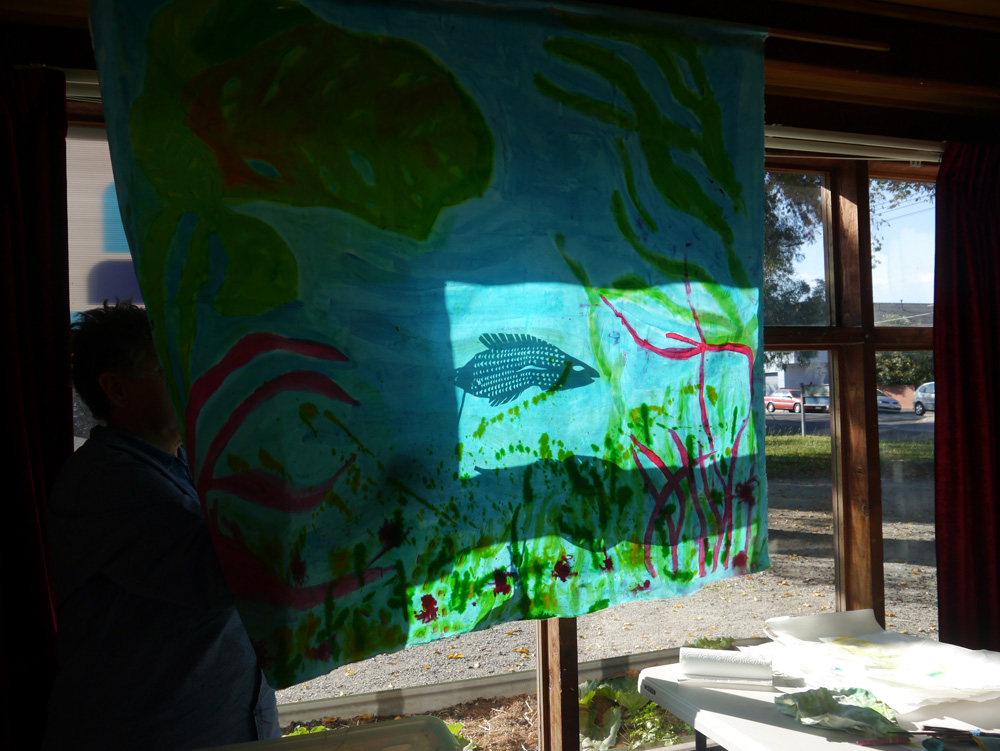

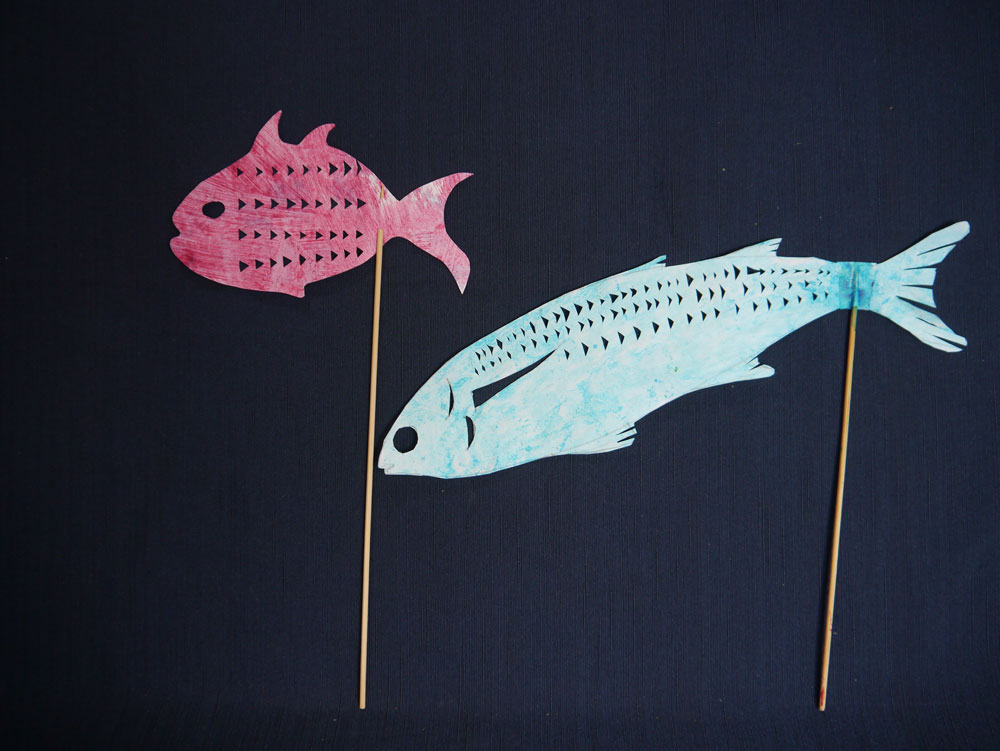
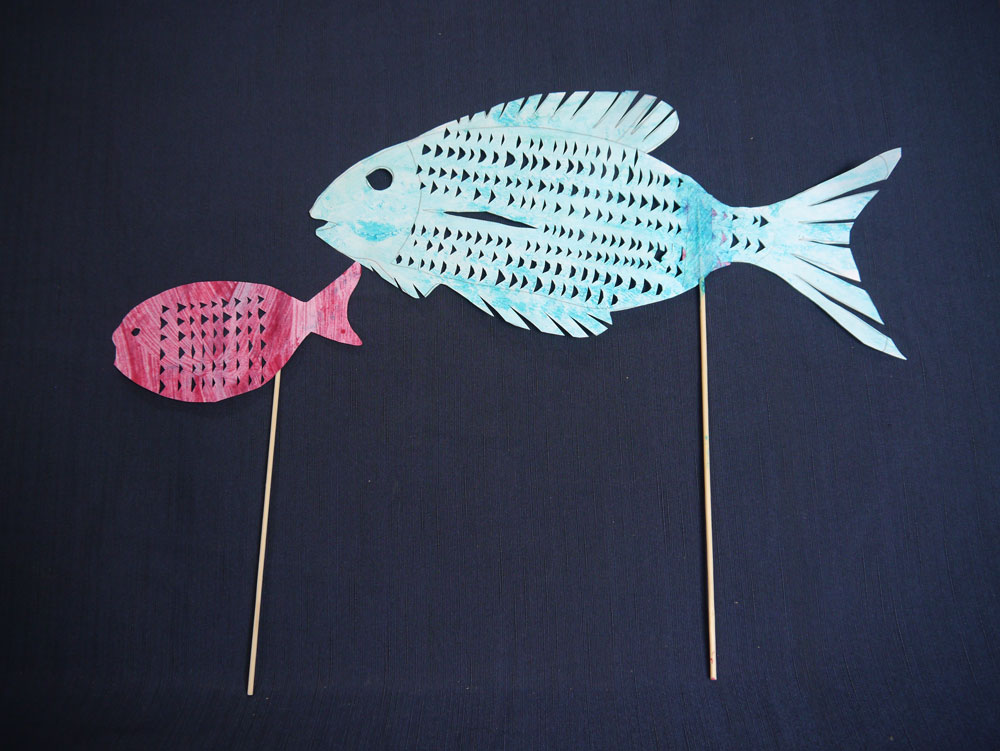
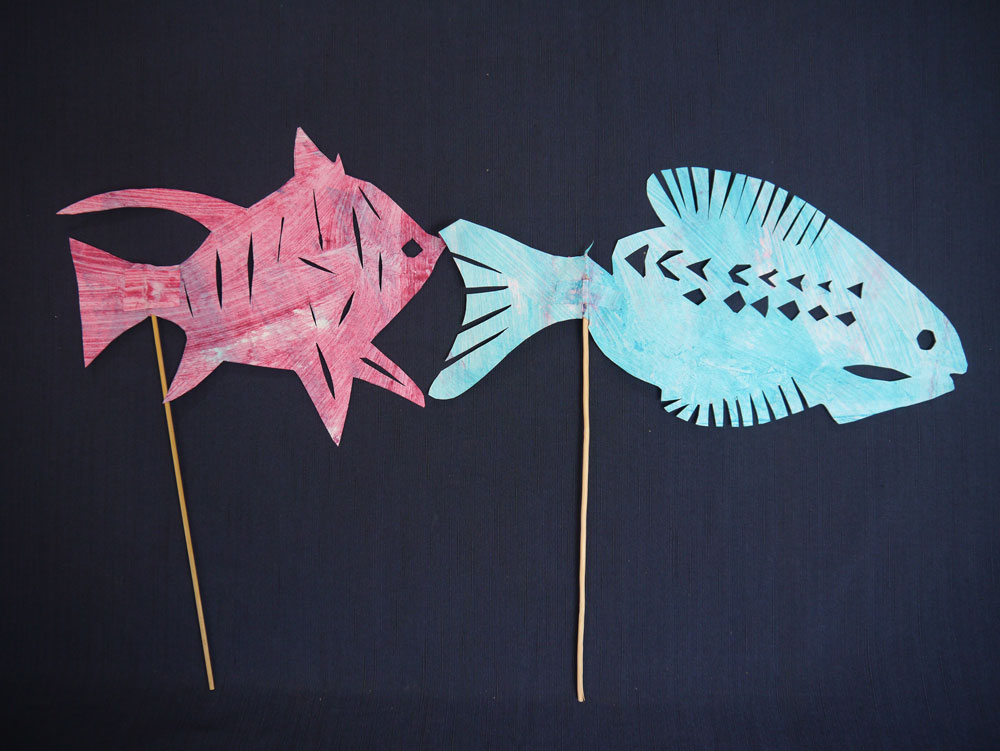
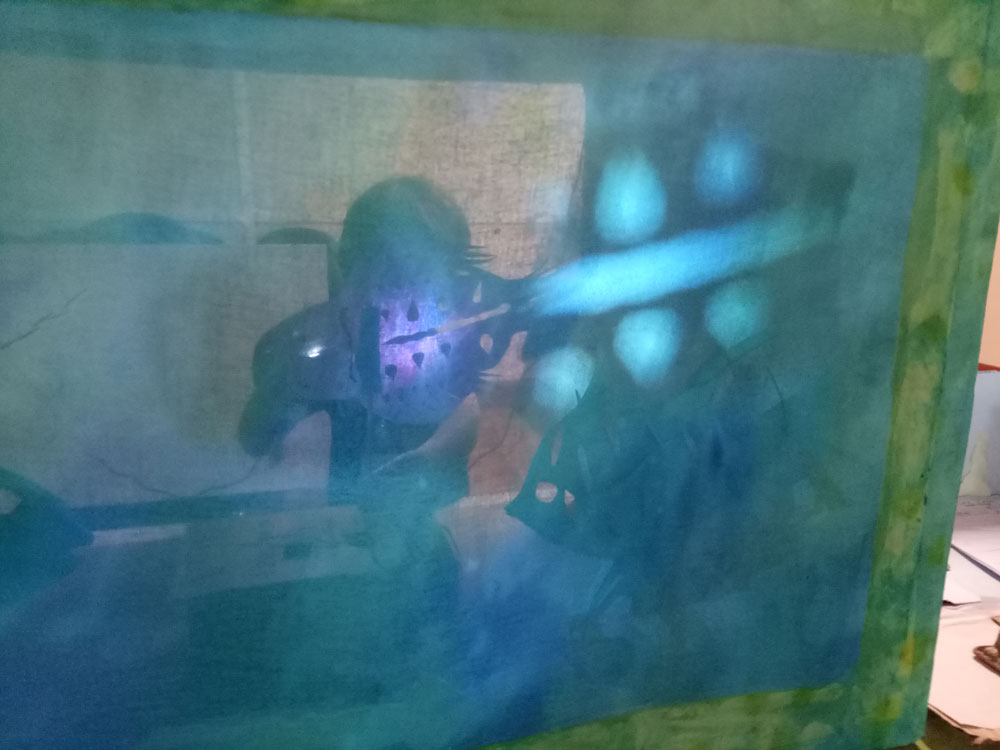

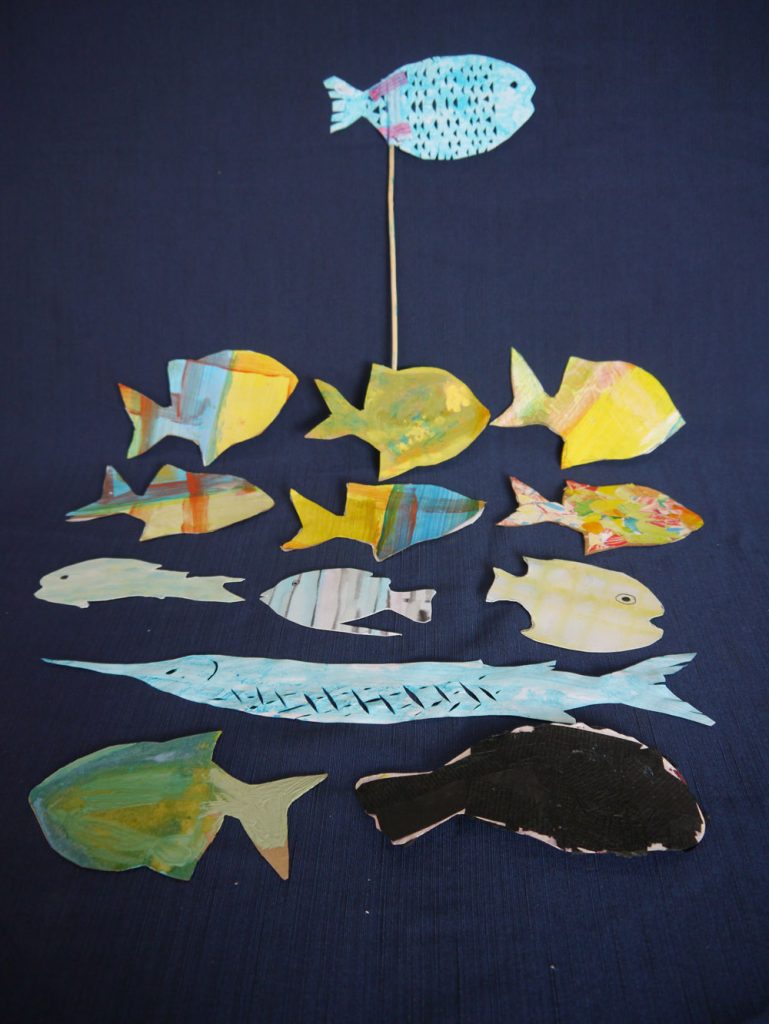
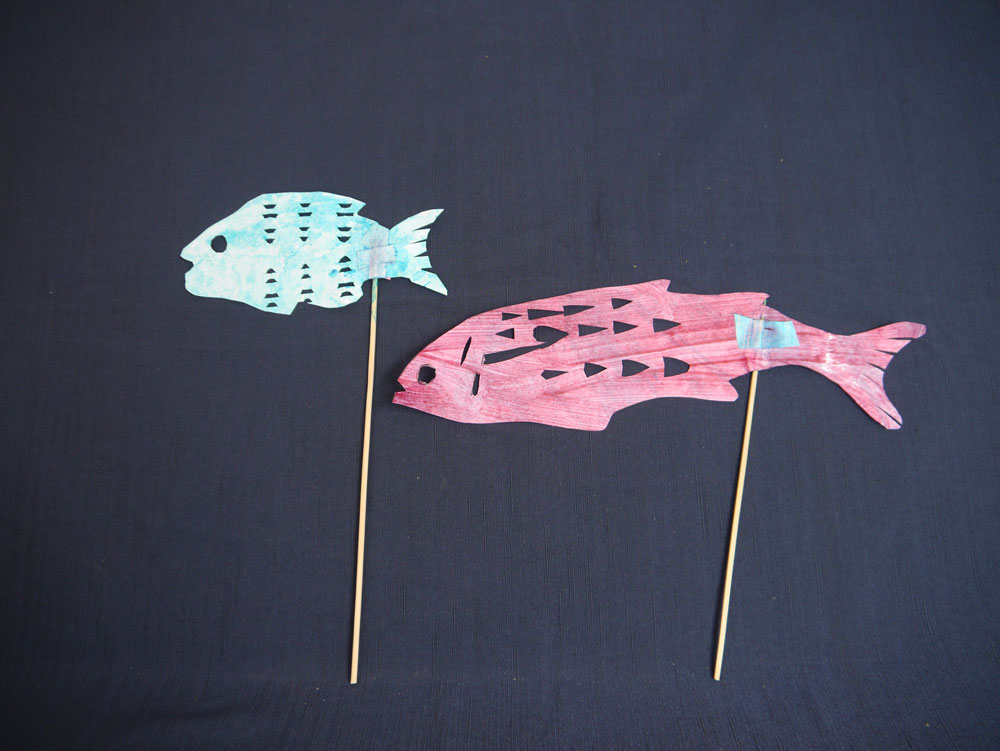

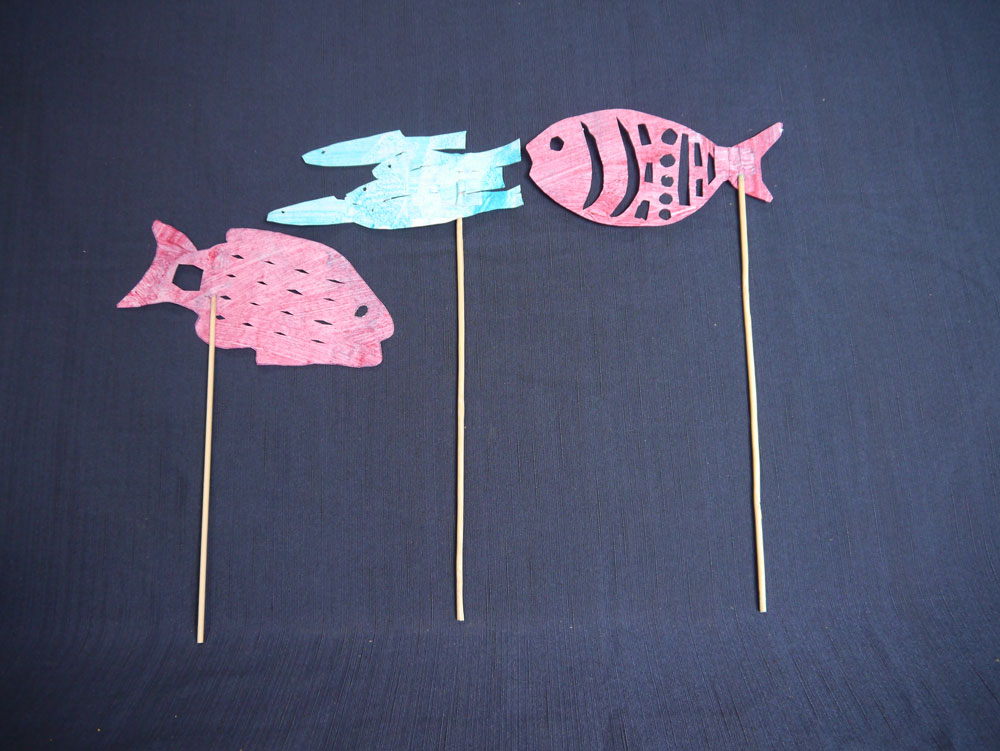
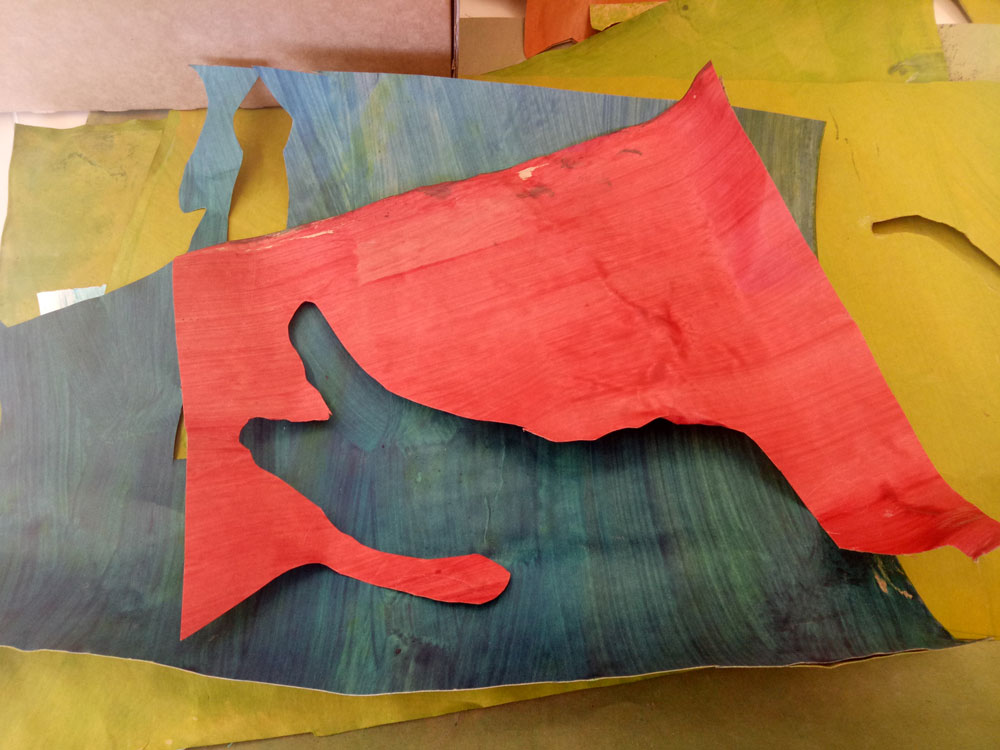
These shadow puppets where made from hand dyed and glued papers and cut out from a template during a workshop at Brunswick Neighbourhood House in 2019 for the Sea is Sinking Installation. The handles are meat skewers glued with tag paper.
Home screens can be made from sheets hung in a light filled window or put the puppet in front of a lamp pointing to a wall or intense midday sun outside. Play and experiment.
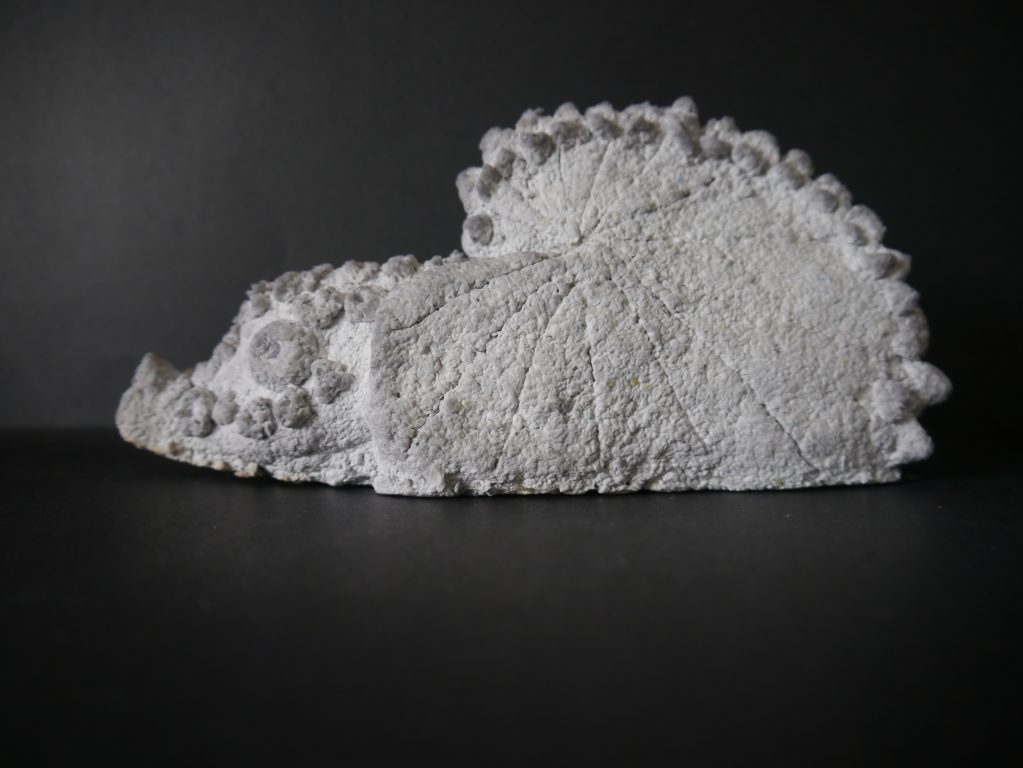
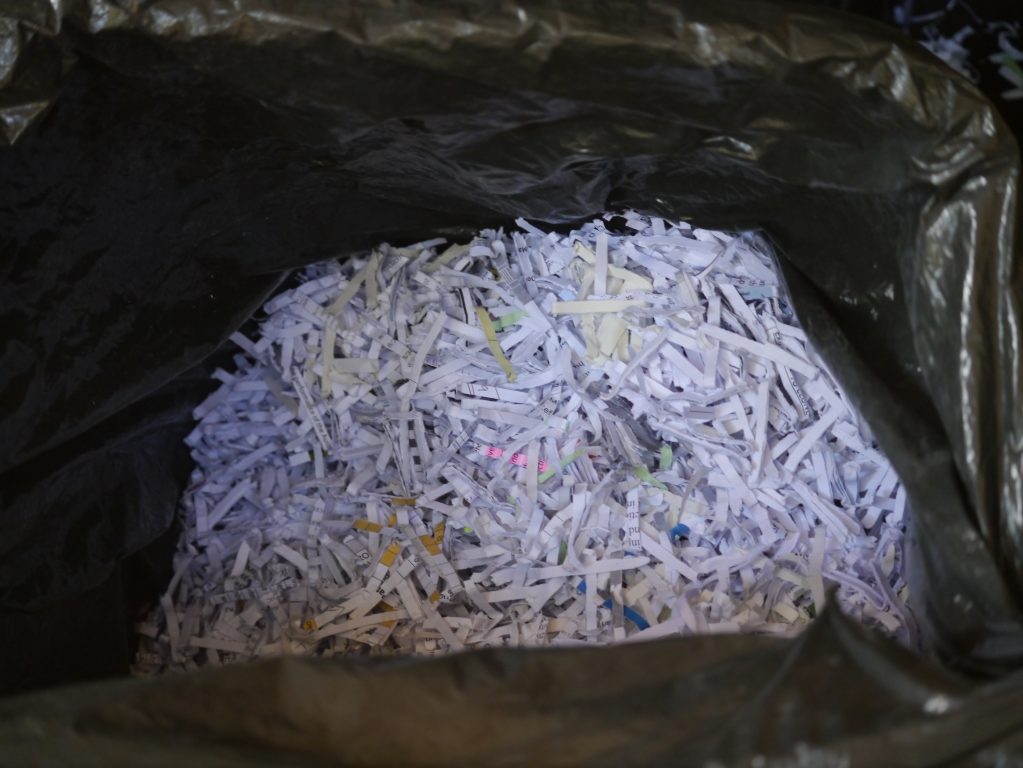
Office paper, scrap paper any paper lying around your home. Cut into strips smaller the better. Or if you have a paper shredder that is better still.
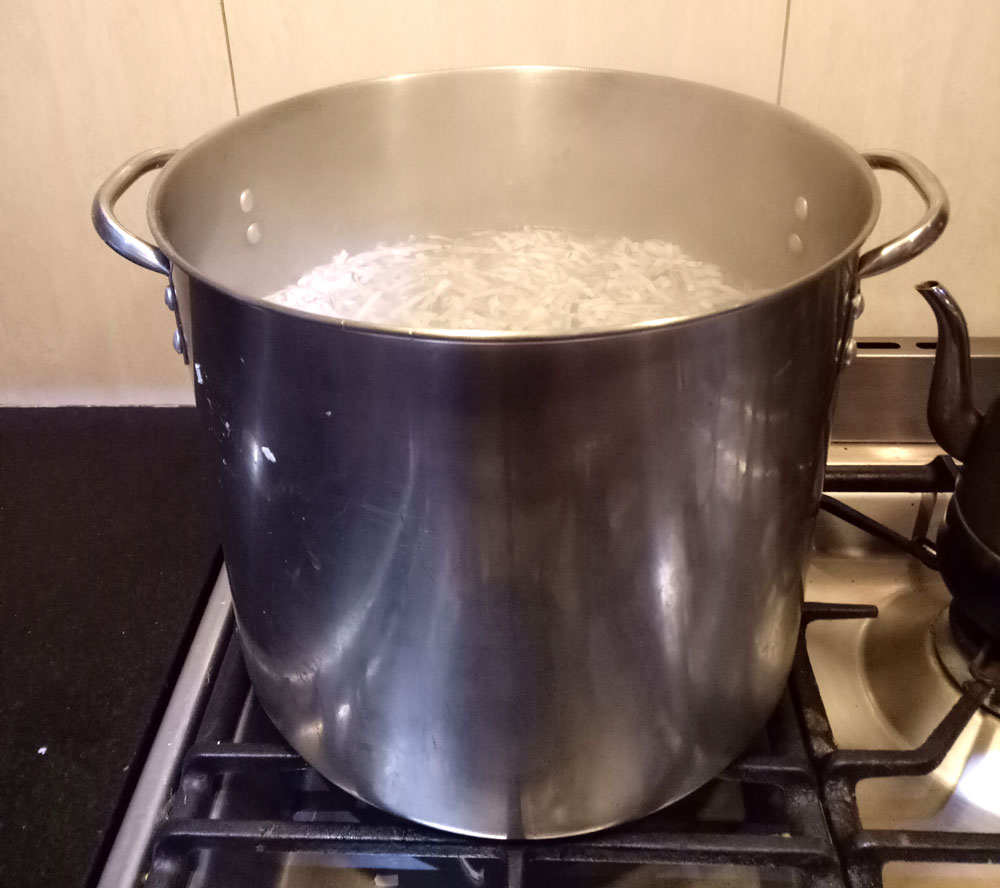
Put the shredded paper in a large pot and fill with water and boil. Leave soak over night. Add a bit of salt and eucalyptus oil to stop bacteria and mold.
Get a food blender or paint blender and swirl the paper around until all the fibers break up into small bits.
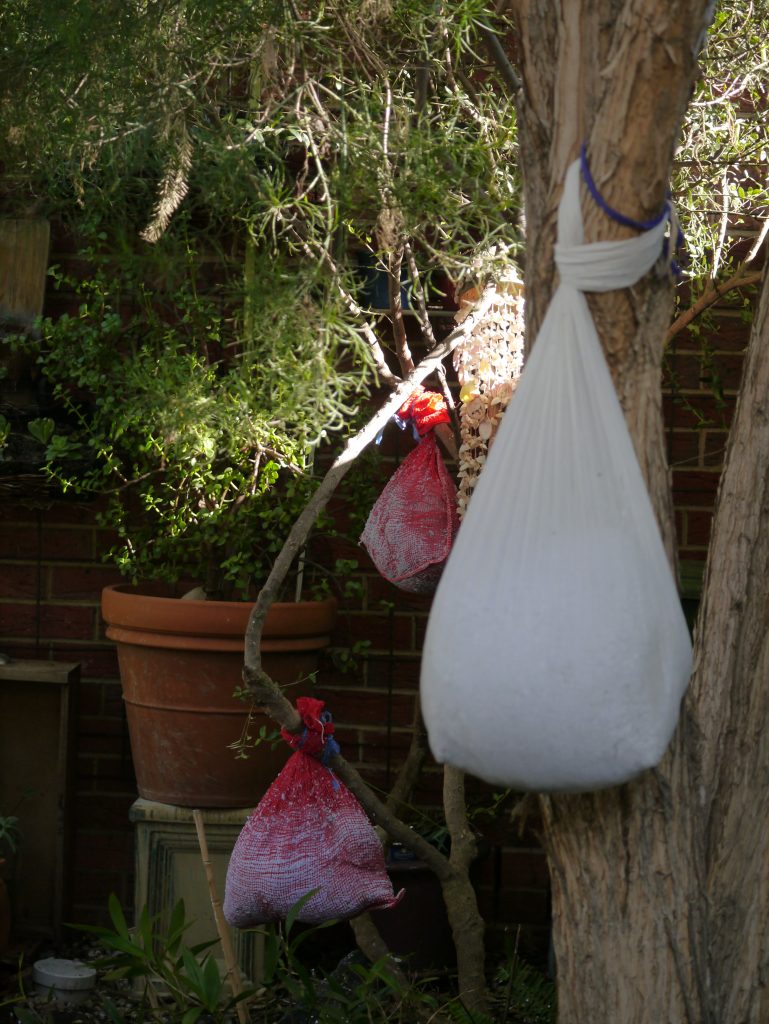
Drain through a cotton sheet or or fine mesh cloth.
when drained squeeze as much water out as possible.
Now it should look friable and break away in your hand
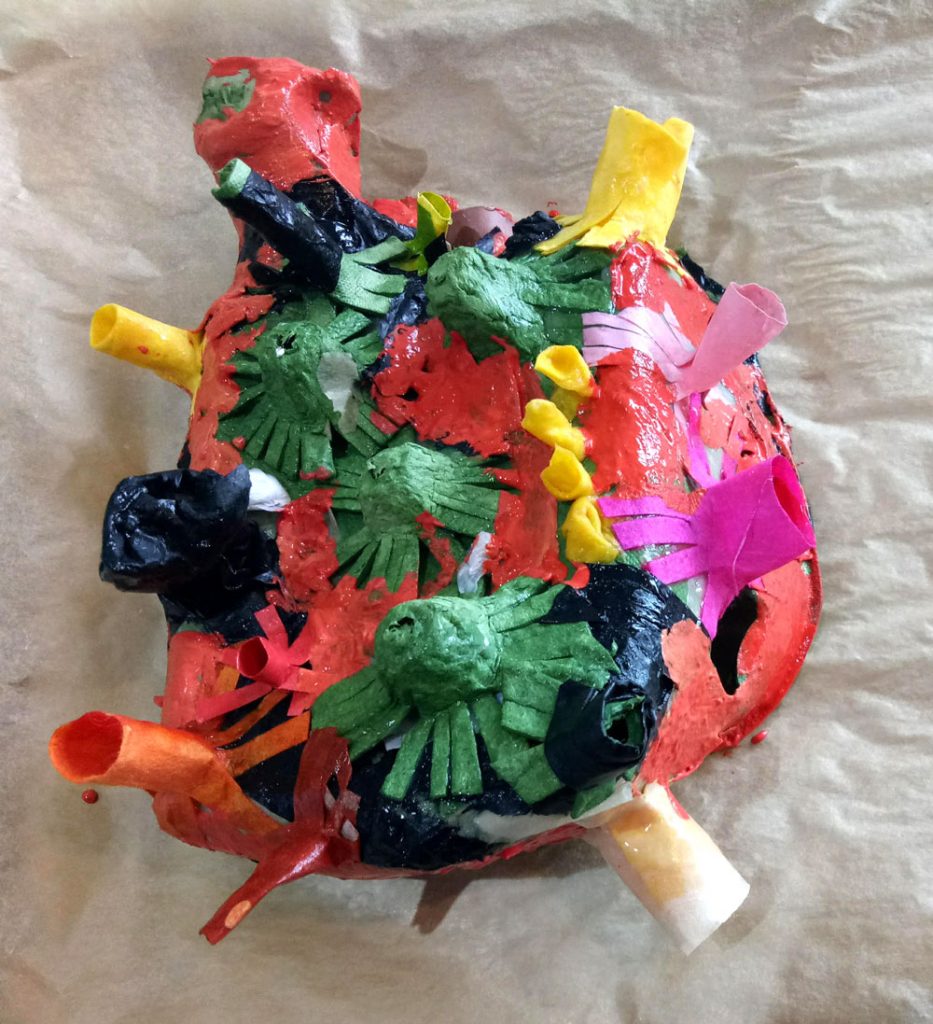
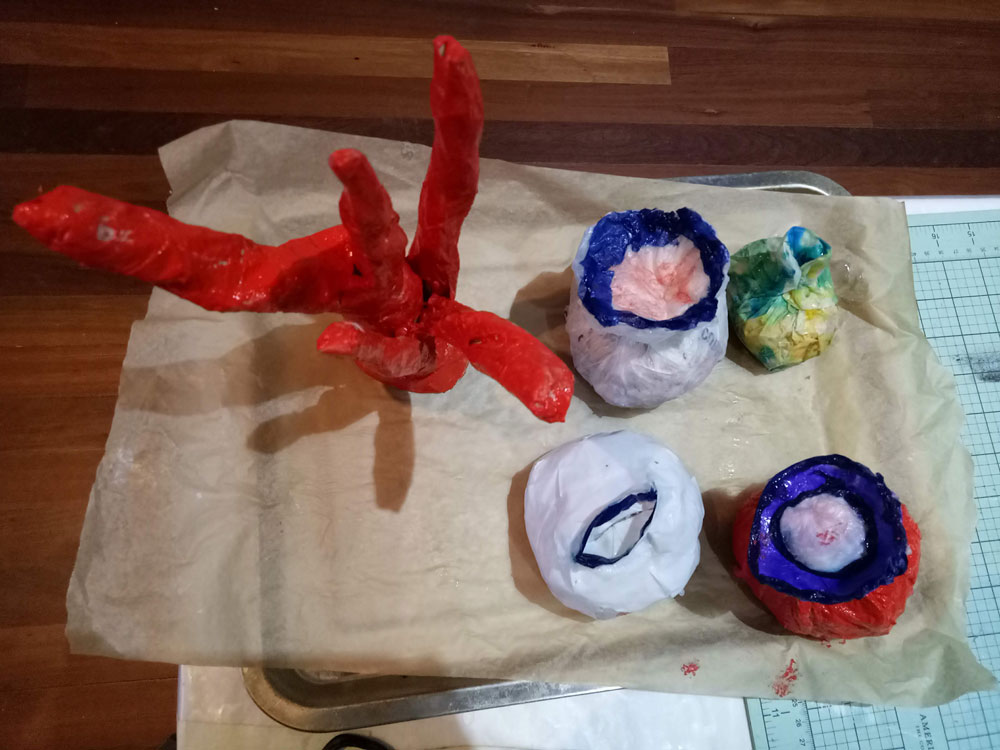
Add handmade wheat starch glue, powdered paint or vegetable dye and mush and squeeze until desired consistency. I grab a hand full in my hand and squeeze lightly if it holds its ready to start creating. Add glue if need be along the way. You also may need to keep squeezing water out if it wasn’t done enough the first time. Practice makes perfect on making pulp.
Dry your creations on a sunny window sill and/or bake in the oven on LOW.
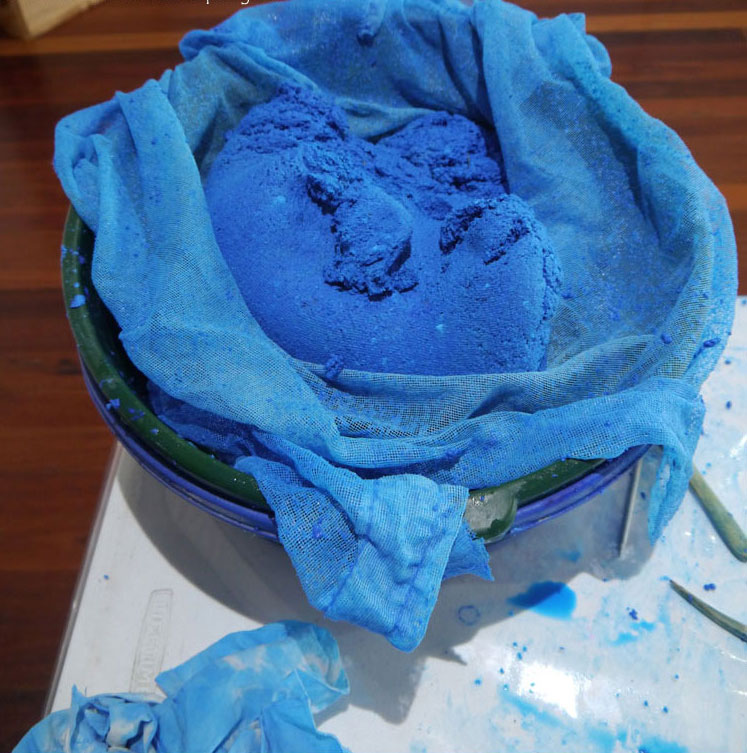
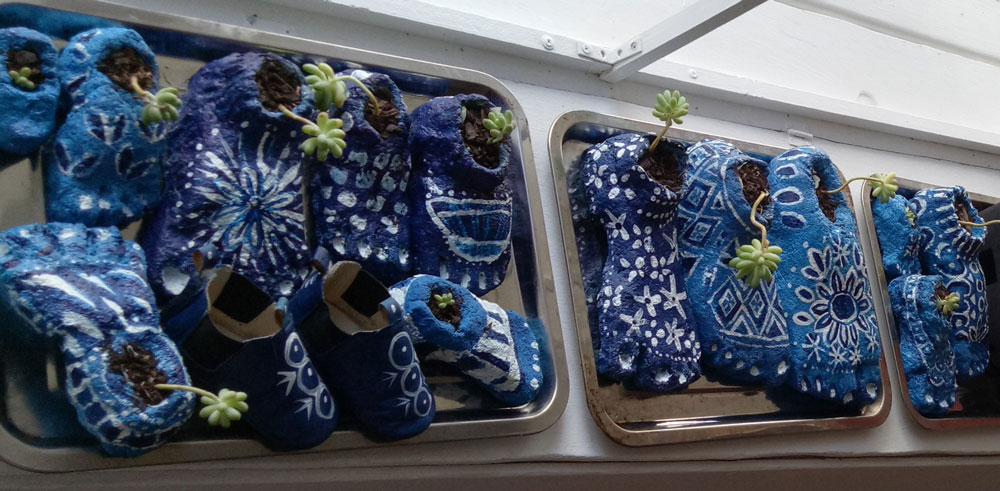


Ingredients: Vegetable dye, homemade glue, salt, eucalyptus oil
Mix ingredients to desired consistency – it can be very runny to quite stiff it will be dependent on the materials you will be using.
If you add calcium carbonate turns the paint from translucent to flat (non see through).
This paint is very accessible, affordable for children and is non toxic.
If you want to get into it more further reading / good reference material is Green Guide for artists by Karen Michel Quarry press 2009 and Artists hand book a complete professional guide to materials and techniques by Pip Seymour Arcturus Press 2003 or go to my blog page on types of paint you can make. https://fernartz.com/make-your-own-paint/
What is a preservative? Helps stop the growth of mould and bacteria. Some other preservatives other than essential oils is sugar and salt have been used throughout the ages as a preservative for foods often used in bottling of vegetables.
What is mould? Is a fungi such as a mushroom. Mould can be a health hazard causing you to sneeze or irritate the eyes. What is bacteria? Some of the first forms of life and can divide and grow very quickly however some bacteria can be harmful to humans.